


Stronger Together: All Star Healthcare Solutions Acquires Cross Country Locums
We’re excited to announce that All Star Healthcare Solutions has officially acquired the locums division of Cross Country Healthcare, a leading, technology-driven healthcare workforce solutions company.
This exciting milestone strengthens our position as a national leader in locum tenens staffing and opens the door to even more opportunities for the healthcare professionals and organizations we serve.
In the short term, the business will operate as “Cross Country Locums — an All Star Healthcare Solutions company.”
Together, All Star and Cross Country Locums will offer a broader range of specialty capabilities and enhanced support to a growing community of providers and clients across the country. By combining our experienced teams, resources, technology, and service models, we’ll be able to reach more markets, connect more healthcare professionals with career opportunities, and make the staffing experience simpler and more seamless.
At the heart of this acquisition is a shared commitment to exceptional service. Both organizations have built strong teams dedicated to supporting healthcare professionals and the facilities that rely on them. As we grow together, we’ll continue delivering the personalized, high-quality service our providers and clients know and trust.
“Cross Country Healthcare’s locums business brings an established client base, an experienced team, and a strong record of service,” said Ken Bernstein, Chief Executive Officer of All Star Healthcare Solutions. “This acquisition strengthens our offerings and unlocks growth opportunities as we execute on our mission of matching doctors and advanced practitioners. We are committed to a smooth transition, maintaining continuity for every client and physician, and upholding our established standard of service quality. We welcome our new Cross Country Locums teammates to All Star!”
For our providers and clients, this means more resources, more opportunities, and an even stronger team working to support their needs. Our focus now is thoughtfully bringing our teams together and making the transition as seamless as possible for everyone we serve.
We’re incredibly proud to welcome Cross Country Locums to All Star and excited to build on the experience, relationships, and strengths of both organizations. Here’s to the next chapter — and all we’ll accomplish together!


How to Choose a Locum Tenens Agency
The agency you sign with shapes your locum experience more than most providers expect. It decides which assignments you ever hear about, how fast you get credentialed, what your malpractice coverage actually protects, and how much administrative weight lands on you instead of on someone else.
With the U.S. facing a projected shortfall of up to 86,000 physicians by 2036, new firms continue to enter an already crowded market, making the choice harder, not easier. Two providers with identical specialties and identical availability can have completely different years depending on which agency picked up the phone first.
So the short answer to how to choose a locum tenens agency is this: choose the one that consistently brings you assignments worth taking, protects you with the right malpractice coverage, pays transparently, and treats the relationship as a partnership rather than a transaction.
The rest of this guide explains how to tell which agencies actually do that, which questions surface the truth quickly, and which red flags should end a conversation.
Quick Answer: How to Choose a Locum Tenens Agency
- Weigh eight factors: assignment quality, the consultant relationship, credentialing speed, malpractice coverage, pay and contract transparency, travel and logistics, reputation and ethics, and communication.
- Confirm malpractice coverage in writing before you sign. Occurrence and claims-made-with-tail both protect you fully; what matters is knowing which one you have and who pays for tail.
- Start with NALTO membership as your fastest filter for basic industry accountability.
- Favor depth of relationship over breadth of registration. One or two agencies that consistently deliver beat a long list that treats you as interchangeable.
- Walk away from pressure to commit before you have seen the contract, vague malpractice answers, and assignments that clearly do not fit your stated preferences.
What a locum tenens agency actually does for you
A locum tenens agency is more than a job board with recruiters attached. A good one serves as the operational layer between you and the facility, handling the work that would otherwise consume your time and pose risk. Understanding that role is what makes the evaluation criteria below meaningful.
A full-service locum tenens agency typically handles:
- Sourcing and matching assignments to your specialty, license, schedule, and pay expectations
- Negotiating your rate and contract terms with the facility
- Managing credentialing and hospital privileging paperwork
- Coordinating state licensing, including Interstate Medical Licensure Compact (IMLC) applications where eligible
- Providing and administering malpractice insurance for the assignment
- Arranging and paying for travel and housing
- Handling billing with the facility so you are paid correctly and on time
- Offering support while you are on assignment when something goes wrong
The difference between agencies is rarely whether they do these things. It is how well they do them, how transparent they are about the details, and whether the people doing the work treat you like a colleague or a line item.
The eight factors that matter most when choosing an agency
When you compare locum tenens agencies, weigh these eight factors. The table gives you the standard to hold each agency to and the single question that exposes how they actually perform.
| Factor | What “good” looks like | Question to ask | How All Star delivers it |
| Assignment quality and inventory | Real depth in your specialty and the states you want, not a thin list padded with stale postings | “How many active assignments do you have right now in my specialty and my target states?” | Deep, longstanding client relationships across more than 150 hospital systems and 1,600+ facilities; consultants negotiate rates and terms on your behalf |
| Consultant relationship | A consistent point of contact who learns your preferences and does not churn | “Will I work with one dedicated consultant, and how long have they been with the company?” | A specialty-team model pairs you with a dedicated expert in your field, reflected in a 99.5% rematch rate |
| Credentialing and licensing | A dedicated team that drives the paperwork, with realistic timelines | “Who manages credentialing, and what is your average time to get a provider working?” | A full-service team manages credentialing, hospital privileging, and state licensing, including IMLC applications where eligible |
| Malpractice insurance | Occurrence coverage, or claims-made with tail included, confirmed in writing | “What type of malpractice policy do you provide, and is tail coverage included?” | Malpractice and tail coverage are included with the assignment, along with state licensing costs (confirm your policy type in writing) |
| Pay and contract transparency | Clear rates, no vague “we’ll figure it out,” and contracts you can actually read | “How is my rate structured, and can I see the assignment contract before I commit?” | Consultants explain how your rate is structured and walk you through the contract before you commit |
| Travel and logistics | Travel and housing arranged and paid by the agency, not reimbursed weeks later | “Do you book and pay for travel and housing directly, or do I front the cost?” | Travel and housing are arranged and covered as part of the assignment, so you are not fronting costs |
| Reputation and ethics | NALTO membership, verifiable reviews, and references from providers in your specialty | “Are you a NALTO member, and can you connect me with a provider in my specialty?” | NALTO member and 2026 ClearlyRated Best of Staffing winner (Client and Talent), based on independently verified surveys |
| Communication and support | Responsive during business hours and reachable when an assignment goes sideways | “If my flight is canceled the night before a shift, who do I call?” | Your dedicated consultant stays reachable throughout the assignment, not just at signing |
Three of these deserve extra attention because they are where providers most often get burned.
Assignment quality matters more than assignment quantity. An agency with thousands of postings but little depth in your specialty will keep sending you mismatches. You want a consultant who can name real, current openings that fit you, not one who promises that something will come up.
The consultant relationship is the part you live with day to day. A responsive, honest consultant who remembers that you will not take call-heavy assignments is worth more than a slightly higher rate from an agency that treats you as interchangeable. Ask how long your consultant has been there. High turnover on the agency side becomes your problem.
Malpractice coverage is the factor most providers underweight and the one that can cost the most if it goes wrong. It gets its own section below.
Malpractice coverage: the one thing to get in writing
Most agencies provide malpractice insurance as part of the assignment, but the type of policy matters, and the language is easy to gloss over. Get this in writing before you sign anything.
Two policy structures are common, and both can fully protect you. What matters is knowing which one you have and confirming the details in writing.
| Coverage type | What it covers | What to confirm |
|---|---|---|
| Occurrence | Any claim arising from work done during the policy period, even if the claim is filed years later | That the policy is genuinely occurrence-based; if so, you are covered with no further action |
| Claims-made | Claims filed while the policy is active | That tail coverage is included or arranged, so you are not exposed after the assignment ends |
| Tail coverage | Extends a claims-made policy to cover claims filed after it ends | Whether it is included and who pays for it: you or the agency |
Why this matters: malpractice claims in many specialties surface months or years after the care was delivered. With occurrence coverage, you are covered no matter when the claim lands. With a claims-made policy, you are equally protected as long as tail coverage is in place; without it, you can be personally exposed for care you provided on an assignment that ended long ago. Ask every agency, in writing, which type they provide, and if it is claims-made, whether tail is included and who pays for it. An agency that answers clearly and puts it in the contract is showing you how they operate. One that gets vague is telling you something too.
Note: This guide is general information, not legal advice. For high-value, long-term, or complex contracts, independent legal review is worth the cost.
Questions to ask before you sign with an agency
Use this as a script on your first real conversation. The goal is not to interrogate anyone. It is to see how clearly and honestly the agency answers.
Assignments
- How many active openings do you have in my specialty and target states right now?
- How are assignments matched to my preferences and availability?
Pay and contracts
- How is my rate structured, and what is and is not included?
- Can I review the assignment contract before committing?
- How and how often will I be paid?
Credentialing and licensing
- Who handles credentialing, and what is your average time to a first assignment?
- Will you manage my state licensing and IMLC applications?
Malpractice
- Is the policy occurrence-based or claims-made?
- If claims-made, is tail coverage included, and who pays for it?
Support
- Will I have one consistent consultant?
- Who do I reach if something goes wrong during an assignment, including after hours?
Red flags to watch for
A few warning signs should make you slow down or walk away:
- Pressure to commit before you have seen the contract. A rate quoted only verbally tends to change.
- Vague or shifting answers about malpractice coverage. This is too important to be fuzzy.
- A recruiter who pushes assignments that clearly do not match your stated preferences. It signals they are filling their gap, not serving you.
- No NALTO membership and no verifiable reviews or references. Reputable agencies are easy to check.
- High turnover on the agency side, so you keep starting over with someone new.
- Asking you to front travel or housing costs and “get reimbursed later.”
- Reluctance to connect you with a current provider in your specialty.
None of these alone proves an agency is bad, but two or three together is a pattern worth respecting.
Should you work with one agency or several?
Many providers register with more than one agency, especially early on, to see a wider range of assignments. That is reasonable, but there is an etiquette and a risk to manage.
The main risk is double presentation: two agencies submitting you to the same facility, which looks unprofessional and can disqualify you from the assignment entirely. Avoid it by keeping a simple record of where each agency has submitted you, and by telling every agency to confirm with you before presenting you anywhere.
Working with several agencies widens your options, but it also dilutes the relationship. A consultant who knows you are one of many tends to invest less. Many experienced locums eventually consolidate to one or two agencies that consistently deliver, because depth of relationship produces better assignments than breadth of registration. The right number is the one that keeps your calendar full with assignments you actually want.
How recruiter pay works, and why it affects you
Agency-side staff are typically compensated when they place you, often with a commission tied to the assignment. That is not sinister, but it explains a lot of behavior. A recruiter under pressure to fill a specific opening may steer you toward it even when it is a weak fit. The way to protect yourself is simple: be clear about your non-negotiables, monitor whether the agency respects them, and favor firms whose people behave as if they are building a long-term relationship rather than closing a single deal. Transparency about pay and contracts is the best signal that an agency’s incentives are aligned with yours.
The All Star Advantage
The agencies worth staying with share a pattern. They are transparent about pay and contracts; they handle credentialing and logistics, so you do not have to; they protect you with the right malpractice coverage, and the people you work with treat you like a colleague rather than a transaction.
At All Star Healthcare Solutions we have built our model around exactly that. Founded in 2003 and headquartered in Boca Raton, Florida, All Star matches physicians, nurse practitioners, physician assistants, and CRNAs across more than 85 specialties, all 50 states, more than 150 hospital systems, and more than 1,600 healthcare facilities. All Star is a NALTO member and a 2026 ClearlyRated Best of Staffing award winner for both client and talent service.
Specialty-team expertise, not a generalist desk
All Star works on a specialty-team model. You work with a consultant who is a dedicated expert in your field, not a generalist managing a mixed caseload. For a cardiologist, that means a consultant who understands cardiology credentialing timelines, market rates, and the clinical environment you are walking into.
Full-service credentialing, licensing, and coverage
All Star manages credentialing and hospital privileging, coordinates state licensing, and arranges travel and housing. The team covers malpractice insurance, tail coverage, and state licensing costs as part of the assignment. As with any agency, confirm your specific policy type in writing before you sign.
A relationship built to last
All Star maintains a 99.5% rematch rate, a direct reflection of providers who come back. And because All Star offers both locum tenens and permanent placement, a provider who starts in locum work and later wants a permanent role can make that move without starting over with a new agency. This is a long-term career partnership, not a one-assignment transaction.
Recognized service
All Star has earned repeated “Best Places to Work” and “Top Workplace” recognition, along with the ClearlyRated 2026 Best of Staffing Client and Talent awards, which are based on independently verified surveys of the clients and providers it serves, not self-reported testimonials.
If you are new to this model, it is worth understanding what locum tenens is and how it works before you commit to an agency. And if you are weighing your options, see how All Star compares in our breakdown of the top locum tenens companies.
Ready to find the right locum tenens partner?
Whether you are exploring locum tenens for the first time or ready to find your next assignment, the most useful next step is to talk to a consultant who will be straight with you. All Star’s consultants specialize by field and will tell you what they actually have in your specialty and target states.
Submit your CV or browse current locum tenens jobs to see what kind of assignments and conversations to expect.
Frequently asked questions
Are locum tenens agencies worth it?
For most providers, yes. A good agency handles credentialing, licensing, malpractice, travel, and billing, and negotiates your rate, which frees you to focus on clinical work. The value depends heavily on choosing an agency that is transparent and responsive.
Can I work with more than one locum agency?
Yes, and many providers do, especially when starting out. Just track where each agency submits you to avoid double presentation to the same facility, which can cost you the assignment.
Who pays for malpractice insurance on a locum assignment?
The agency typically provides and pays for malpractice coverage during the assignment. Confirm whether it is occurrence-based or claims-made, and if it is claims-made, confirm that tail coverage is included and who pays for it.
How do I check a locum agency’s reputation?
Amongst other reputation signals, look for NALTO membership, read verified reviews on sites such as ClearlyRated.
Sources
National Association of Locum Tenens Organizations (NALTO) — member directory and code of ethics
Association of American Medical Colleges (AAMC) — physician workforce projections
ClearlyRated — Best of Staffing verified provider and client reviews
Interstate Medical Licensure Compact (IMLC) — multistate medical licensing

How to Get Your IMLC Letter of Qualification: A Physician's Step-by-Step Guide
An IMLC Letter of Qualification (LOQ) is the document your State of Principal License issues to confirm you qualify to use the Interstate Medical Licensure Compact. It is not a medical license itself. It is the credential that unlocks an expedited path to licensure in dozens of participating states, so you can apply once and obtain licenses in multiple states without starting a separate application with each medical board.
If you are a physician exploring locum tenens, telemedicine, or a move to a new state, this guide explains what the LOQ is, whether you qualify, how to obtain one step by step, what it costs, how long it takes, and what to do once it is in hand. In physician licensing, "Letter of Qualification" refers specifically to this IMLC document, and it differs from documents of the same name used in estate administration or employment.
Quick Facts: The IMLC Letter of Qualification
- The LOQ is issued by your State of Principal License (SPL) and confirms you are eligible to use the Compact. It is not a license on its own.
- One qualified physician, one expedited process: the LOQ lets you obtain licenses in participating states without applying to each board separately.
- The IMLC includes more than 40 states plus the District of Columbia and Guam, and the list continues to grow. Confirm current members on the official IMLC map before you plan.
- The IMLC application fee is $700 and is non-refundable.
- An LOQ is valid for 365 days, and you can add states at any point during that window.
- Most physicians who hold a full, unrestricted license in a member state qualify.
- The IMLC is a pathway for physicians (MD and DO). Advanced practitioners use separate licensure pathways.
What Is an IMLC Letter of Qualification (LOQ)?
A Letter of Qualification is the document the Interstate Medical Licensure Compact uses to certify that a physician meets the Compact's eligibility standards. Your State of Principal License reviews your credentials, and if you qualify, it issues the LOQ to the Compact on your behalf. From there, you can request full licenses in any participating state you choose.
The LOQ Is Not a Medical License
The LOQ does not let you practice anywhere by itself. It is a verification step, not a license. Once your LOQ is issued, each state you select still grants its own full, individual medical license, the Compact simply makes obtaining those licenses faster. Physicians who expect the LOQ to function as a single national license are the most common source of confusion, so it is worth stating plainly: the IMLC produces separate state licenses, issued quickly, not one license that covers every state.
How the LOQ Fits Into the Compact
The Interstate Medical Licensure Compact is an agreement among participating states to streamline licensure for qualified physicians. The LOQ is the gateway document within that system. You designate one member state as your State of Principal License, that state verifies your eligibility once, and the resulting LOQ travels with you as you request licenses elsewhere. For the full legislative background and the current member map, see the official Interstate Medical Licensure Compact site at imlcc.com.
Do You Qualify? IMLC Eligibility for Physicians
Most physicians who hold a full, unrestricted license in a Compact member state meet the IMLC's eligibility standards. The Compact applies a single, high bar, and qualification comes down to two things: a State of Principal License that meets the criteria, and a clean professional record that satisfies the general requirements below.
Designating a State of Principal License (SPL)
Your State of Principal License is your entry point into the Compact. To use a state as your SPL, you must hold a full, unrestricted medical license there, and the state must meet at least one of these four criteria:
- It is your primary state of residence.
- At least 25% of your medical practice occurs there.
- Your employer is located there.
- It is the state you use for federal income tax purposes.
You must maintain a qualifying SPL while you hold your LOQ, though you can redesignate your SPL later if your circumstances change.
General Eligibility Requirements
Beyond the SPL, the Compact requires that you:
- Graduated from an accredited medical school, or one listed in the International Medical Education Directory.
- Completed graduate medical education accredited by the ACGME or AOA.
- Passed the USMLE, COMLEX-USA, or an accepted predecessor exam within three attempts per component. The Canadian LMCC is not accepted.
- Hold a current, or time-unlimited, specialty certification from an ABMS or AOA member board.
- Have no history of disciplinary action, criminal history, or controlled-substance actions against your license, and are not currently under investigation.
SPL Exceptions to Know
Some member states issue licenses through the Compact but cannot serve as a State of Principal License. Hawaii and Vermont fall into this category, which means you can obtain a license in those states through the Compact but cannot use them as your entry point. Because participation details change, confirm the current SPL-eligible list on imlcc.com before you designate yours.
How to Get Your Letter of Qualification, Step by Step
Obtaining your LOQ is a defined, six-step process managed through the Compact and your State of Principal License.
- Confirm your eligibility. Review the SPL and general requirements above before you begin. Compact fees are non-refundable, so it is worth verifying you qualify first.
- Start your application and designate your SPL. Create your account through the Compact and select the member state that will serve as your State of Principal License.
- Complete the application and pay the $700 fee. Submit your application to your SPL's medical board along with the non-refundable application fee.
- Complete fingerprinting and a national background check. This is a required step in verifying your record.
- Wait for SPL verification. Your SPL board verifies your credentials and eligibility. Allow several weeks for this stage.
- Receive your LOQ. Once approved, your Letter of Qualification is issued and is valid for 365 days. You can now request licenses in the participating states you choose.
How Long Does It Take to Get an LOQ?
Most physicians receive their LOQ within several weeks of applying, and individual state licenses follow quickly after that. The timeline below shows the typical path. The single biggest variable is SPL verification, so if you have a target assignment start date, begin the process early and build in buffer time.
| Stage | What Happens | Typical Time |
|---|---|---|
| Application and SPL designation | You apply and select your State of Principal License | 1 to 2 days |
| Fingerprinting and background check | You complete the required national background check | 1 to 2 weeks |
| SPL verification | Your SPL board verifies credentials and eligibility | Several weeks |
| LOQ issuance | Your Letter of Qualification is issued, valid 365 days | After verification |
| State license issuance | Each selected state issues a full license after payment | Often a few business days |
Note: Timelines vary by state and by individual circumstances. Confirm current processing details with your SPL board.
What Does the IMLC Cost? Full Fee Breakdown
The IMLC application fee is $700, but the total cost depends on how many states you ultimately license in. The $700 covers the Compact application and the LOQ. Each state license carries its own separate fee, and a few additional costs apply.
| Item | Amount | Notes |
|---|---|---|
| IMLC application fee | $700 | Non-refundable; covers the LOQ |
| Fingerprinting and background check | Varies | Required step |
| Per-state license fee | Varies by state | Charged by each state you license in |
| Add-states handling fee | $100 | To add states later, within your LOQ's validity |
| Renewal fees | Varies | Ongoing, per state |
As an example, a physician obtaining licenses in three states would pay the $700 application fee plus fingerprinting, plus each of the three states' individual license fees. Because all Compact fees are non-refundable, confirm your eligibility before you pay.
Documents to Gather Before You Apply
Missing documents are the most common cause of delay. Having these ready before you start keeps your application moving:
- Your active, unrestricted license in your State of Principal License
- Medical school details and graduation information
- Graduate medical education and residency information
- Your USMLE or COMLEX-USA examination history
- Current board certification
- Government-issued identification
- Proof supporting your SPL (residence, practice percentage, employer, or tax residence)
Common Reasons Physicians Are Found Ineligible (and How to Avoid Them)
The IMLC sets a deliberately high bar, and most physicians clear it. A small number of issues account for most denials, and knowing them in advance helps you avoid a non-refundable application that will not be approved.
- More than three attempts on a USMLE or COMLEX-USA component. The Compact's three-attempt limit is firm. If this applies to you, traditional state-by-state licensure may be the better route.
- Reliance on the Canadian LMCC. The LMCC is not an accepted examination for the Compact. You will need USMLE or COMLEX-USA.
- Graduate medical education that is not ACGME or AOA accredited. International or non-accredited GME does not satisfy the requirement.
- Prior discipline or an open investigation. Any disciplinary action, or an active investigation at the time you apply, makes you ineligible.
- A lapsed or restricted SPL license. Your State of Principal License must be full and unrestricted, and you must maintain it while you hold your LOQ.
After Your LOQ Is Issued: Selecting States and Managing Licenses
Once your LOQ is issued, the slow part is behind you. The Letter of Qualification is your standing credential within the Compact for the next 365 days, and the steps below are fast by comparison.
Selecting States and Paying Per-State Fees
You can request licenses in as many participating states as you need, and you can apply to multiple states at once. Each state issues its own full license after you pay its individual fee, often within a few business days.
Your LOQ Is Valid for 365 Days
Your Letter of Qualification stays active for one year. During that window you can add states as new opportunities come up, for a $100 handling fee each time, without restarting the process.
Re-Applying After Expiration
If your LOQ expires, adding states later requires a new application, including the $700 fee and fingerprinting again. If you anticipate ongoing multistate work, it is worth tracking your expiration date.
Renewals and Staying Compliant
Each state license you hold renews on its own schedule, and you remain responsible for keeping every license current. If your circumstances change, you can redesignate your State of Principal License through the Compact.
Is the IMLC Right for You?
The Compact is built for physicians who practice, or want to practice, across more than one state. It fits three situations especially well. Locum tenens physicians use it to take assignments in multiple states without a separate months-long licensing process for each. Telemedicine providers use it to treat patients across state lines, since care is regulated where the patient is located. And physicians relocating or expanding their practice use it to get licensed in a new state quickly. If you expect to practice in only one state for the foreseeable future, traditional licensure may be all you need.
How All Star Healthcare Solutions Supports Your Multistate Licensing
Getting licensed is one step. Putting that license to work, across the right assignments, at the right compensation, is where it pays off. For more than two decades, All Star Healthcare Solutions has placed physicians and advanced practitioners across 85 specialties in all 50 states, and licensing support is built into how we work.
Comprehensive Credentialing and Licensing Support
We manage the credentialing process from start to finish, handling document collection, primary source verification, and direct communication with facility credentialing offices. We coordinate Interstate Medical Licensure Compact filings for eligible physicians and manage state-by-state licensing for physicians outside IMLC scope, removing a substantial administrative burden from your side. All Star also covers licensing costs as part of the assignment.
A Dedicated, Specialty-Focused Consultant
You work with a consultant who knows your specialty, your market, and the licensing pathway that fits your situation, not a generalist managing a mixed caseload. Your consultant stays your advocate from the first conversation through the end of every assignment.
Access to Opportunities Once You're Licensed
Our network spans more than 150 hospital systems and more than 1,600 healthcare facilities nationwide, from critical access hospitals to academic centers and telehealth roles, so the license you earn opens real, current opportunities.
All Star is a NALTO member and a ClearlyRated 2026 Best of Staffing award winner, with a 99.5% rematch rate that reflects how often providers choose to work with us again.
Ready to Put Your Multistate License to Work?
Whether you are starting the IMLC process, weighing whether it fits your goals, or already licensed and looking for your next assignment, All Star Healthcare Solutions can help. Our specialty-focused consultants understand the licensing pathways, the credentialing timelines, and the assignments available in your specialty and preferred states.
Frequently Asked Questions About the IMLC Letter of Qualification
What Does LOQ Mean in Medical Terms?
In medical licensing, LOQ stands for Letter of Qualification. It is the document issued by your State of Principal License confirming that you meet the Interstate Medical Licensure Compact's eligibility standards. It is the first credential you obtain in the Compact process, and it lets you request expedited licenses in participating states.
Is the Letter of Qualification a Medical License?
No. The Letter of Qualification is a verification document, not a license to practice. It confirms you are eligible to use the Compact. Each participating state you select then issues its own full, individual medical license.
How Long Is an IMLC Letter of Qualification Valid?
An LOQ is valid for 365 days from issuance. During that year, you can add new states for a $100 handling fee each time without restarting the process (as of June 2026). After it expires, adding states requires a new application and the $700 fee again.
How Long Does It Take to Get an LOQ?
Most physicians receive their LOQ within several weeks of applying, with SPL verification being the longest stage. Once your LOQ is issued, individual states often grant their licenses within a few business days of payment. If you have a target start date, begin early and allow buffer time.
How Much Does the IMLC Cost?
The IMLC application fee is $700 and is non-refundable. Beyond that, you pay fingerprinting costs, a separate license fee for each state you license in, and a $100 handling fee to add states later. Confirm your eligibility before paying, since Compact fees are not refundable.
How Many States Participate in the IMLC?
The Compact includes more than 40 states plus the District of Columbia and Guam, and the list continues to grow as more states adopt the legislation. Because participation changes regularly, check the official IMLC map at imlcc.com for the current members.
Can I Apply for Licenses in Multiple States at Once?
Yes. Once your LOQ is issued, you can request licenses in as many participating states as you need, at the same time. Each state issues its own full license after you pay its individual fee.
What Happens When My LOQ Expires?
Your LOQ is valid for 365 days. The state licenses you already obtained remain valid on their own renewal schedules, but to add new states after your LOQ expires, you must submit a new application, including the $700 fee and fingerprinting.
Data Sources
- Interstate Medical Licensure Compact Commission (imlcc.com)
- Federation of State Medical Boards (FSMB)

AUA2026: The Trials and Trends Shaping Modern Urology
At AUA2026, urology’s direction felt increasingly clear: more precise, less invasive, and more patient centered.
Across oncology, stone disease, BPH, and incontinence care, many of this year’s updates reflected a specialty refining existing therapies, advancing new procedural models, and reducing treatment burden without compromising outcomes.
From bladder-sparing oncology strategies to minimally invasive office-based care, urology continues moving toward treatment approaches shaped not only by clinical efficacy, but also by recovery time, long-term function, and patient quality of life. At the same time, workforce shortages and uneven access to care remain ongoing challenges.
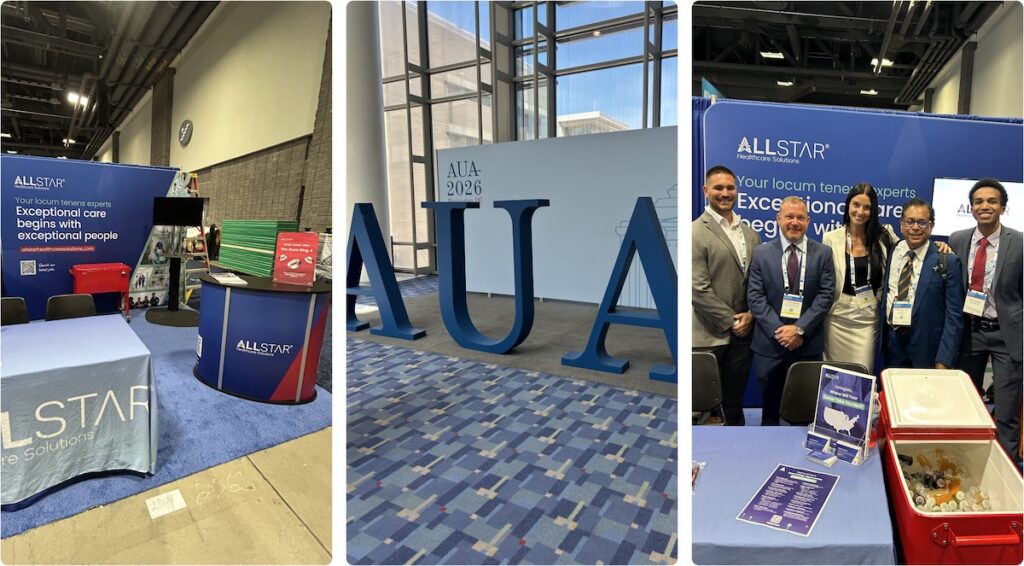
Throughout the conference, the All Star Healthcare Solutions team spoke with urologists nationwide about the clinical, operational, and workforce realities shaping modern urology practice — while also following the latest research and technology updates firsthand.
Here are some of the trials, technologies, and broader trends that stood out most at this year’s meeting.
Top Takeaways at a Glance
- Urologic oncology continues moving toward more combination therapies, selective treatment intensification, and bladder-sparing strategies.
- Benign urology is increasingly focused on minimally invasive, office-based, and durable therapies that reduce recovery burden while preserving symptom relief.
- Quality-of-life and patient-reported outcomes are playing a larger role in defining treatment success, particularly in BPH and incontinence care.
- The future of urology may be defined less by how aggressively clinicians intervene and more by how precisely they match the right treatment to the right patient.
- Workforce shortages and uneven provider distribution continue shaping how and where urologic care is delivered across the country.
Bladder Cancer Care Continues Moving Toward Bladder Preservation
Several of the most closely watched oncology updates at AUA2026 focused not just on controlling disease, but on delaying or avoiding cystectomy altogether in carefully selected patients.
Expanded analyses from the POTOMAC trial supported durvalumab plus BCG in BCG-naïve high-risk non-muscle-invasive bladder cancer, showing improved recurrence-free outcomes compared with BCG alone. The findings reinforce growing interest in combination approaches for patients at elevated risk of recurrence.
Meanwhile, interim phase 2 LEGEND data showed promising complete response rates with intravesical detalimogene voraplasmid in BCG-unresponsive non-muscle-invasive bladder cancer with carcinoma in situ, pointing toward another potential bladder-sparing pathway for patients with historically limited treatment options.
Additional pembrolizumab plus BCG findings in BCG-naïve very high-risk T1 NMIBC pushed that conversation even further. The phase 2 trial reported a 92% complete response rate at 6 months, with no muscle-invasive or metastatic progression observed during the 22-month median follow-up period.
Taken together, the updates reflected a continued shift toward preserving bladder function when appropriate — particularly for patients seeking alternatives to radical surgery.
Prostate Cancer Research Focused on Precision and Treatment Intensification
Prostate cancer updates at AUA2026 reflected a growing emphasis on identifying which patients truly benefit from more aggressive intervention — and where escalation may offer diminishing returns.
The phase 2 ARASEC study evaluated darolutamide plus androgen deprivation therapy in metastatic hormone-sensitive prostate cancer using an external historical control design. The study showed improved progression-free survival, overall survival, and PSA response rates compared with ADT alone, supporting continued interest in treatment intensification strategies for appropriately selected patients.
Meanwhile, long-term follow-up data evaluating extended versus limited pelvic lymph node dissection during radical prostatectomy for intermediate- and high-risk prostate cancer offered a more nuanced picture. While extended pelvic lymph node dissection improved pathologic staging, it did not improve outcomes overall. However, investigators reported a possible biochemical recurrence-free survival benefit among patients with ISUP grade 3–5 disease, suggesting there may still be subgroups where a more extensive surgical approach provides meaningful value.
Additional phase 3 results for CAN-2409 in localized prostate cancer showed improved disease-free survival compared with placebo, along with lower rates of biochemical recurrence, salvage therapy, and metastasis. The strongest benefit appeared in intermediate-risk patients, supporting continued interest in aglatimagene besadenovec as an adjunct to standard radiation therapy.
Rather than moving uniformly toward “more treatment,” many of these studies pointed toward a more tailored approach: intensify therapy where the data support it, while avoiding unnecessary escalation where benefit remains uncertain.
Benign Urology Is Becoming Less Invasive — Without Sacrificing Durability
Some of the most noticeable momentum at AUA2026 came from therapies designed to reduce procedural burden while still delivering meaningful, lasting symptom improvement.
In stone disease, the SOUND pivotal trial met both co-primary endpoints for safety and effectiveness, supporting noninvasive, anesthesia-free lithotripsy as a viable office-based treatment option. If adopted more broadly, technologies like this could significantly change the patient experience surrounding stone management.
At the same time, the PUSH trial offered an important reminder that not every intervention produces the desired downstream outcomes. While the behavioral hydration program modestly increased urine volume in patients undergoing secondary stone prevention, it did not reduce recurrent stone events.
In BPH care, minimally invasive therapies continued showing encouraging durability data. The temporary Urocross implant evaluated in Expander-2 demonstrated sustained lower urinary tract symptom improvement through 24 months after removal, while three-year Zenflow data showed continued reductions in IPSS following treatment.
Urgency urinary incontinence research also reflected the specialty’s growing interest in lower-burden therapies. The INTIBIA trial — the first sham-controlled, double-blind pivotal study of an implantable tibial nerve stimulation device — showed significantly greater symptom improvement than sham treatment at three months, with durable benefit maintained through 12 months.
Across these studies, a broader trend emerged: many patients increasingly want treatments that minimize downtime, preserve quality of life, and fit more realistically into everyday life without sacrificing effectiveness.
Innovation Continues Expanding — Even as Access Challenges Persist
While AUA2026 highlighted increasingly sophisticated therapies and technologies, the meeting also underscored a much more basic challenge: many patients still struggle to access urologic care at all.
According to the 2025 AUA Census, approximately 62% of U.S. counties have no practicing urologist, while roughly 90% of urologists continue practicing in metropolitan or urban areas. The workforce also skews older, with a median practitioner age of 54, reinforcing concerns about long-term pipeline stability and geographic access disparities.
The contrast was difficult to ignore. Even as the specialty advances technologically, many communities continue facing long travel distances, delayed appointments, limited specialist availability, and mounting provider burnout.
Telehealth expansion, satellite clinics, and rural loan repayment initiatives may help improve access in some regions, but long-term workforce solutions will likely remain critical to the future of urologic care delivery.
Why More Urologists Are Exploring Locum Tenens
As new technologies, treatment pathways, and care models continue evolving across urology, the demand for flexible physician coverage is growing alongside them.
Locum tenens urologists are uniquely positioned to experience the changing realities of urologic practice while helping address critical coverage gaps in communities that need it most.
With assignments across healthcare systems nationwide, locum physicians can support continuity of care, expand patient access, and bring specialized expertise to areas that may otherwise lack local urologic services. Many roles also offer exposure to new clinical environments, diverse patient populations, and evolving procedural and practice models — allowing physicians to broaden their experience while adapting to different approaches to urologic care.
At All Star Healthcare Solutions, our specialized urology consultants help physicians find locum opportunities aligned with their clinical interests, career goals, and preferred practice settings. Whether you’re looking to expand your experience, explore new practice environments, or gain more flexibility in your schedule, our team can help connect you with assignments nationwide. Explore our Urologist Salary Guide to benchmark compensation and market trends and browse All Star’s open urology opportunities to find assignments that fit your schedule and expertise.
Data Sources Cited
- AUA 2026 preview: Practice-changing trials in urologic oncology | Urology Times
- AUA 2026 preview: Practice-changing trials in benign urology
- Urology workforce stable but facing access and pipeline challenges, AUA Census finds | Urology Times

What DDW 2026 Revealed About the Future of Gastroenterology
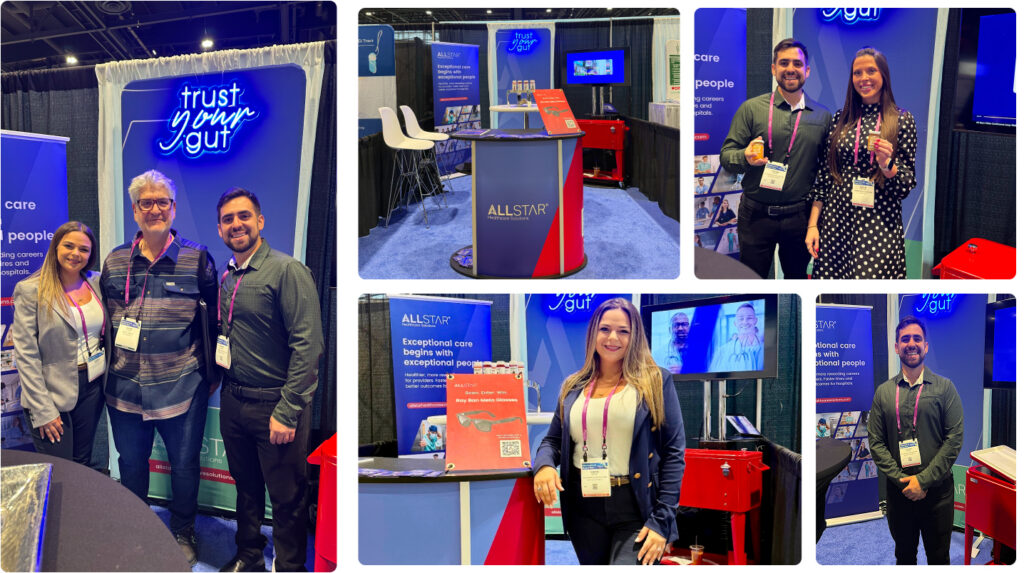
From May 2–5, 2026, members of the All Star Healthcare Solutions Gastroenterology team attended Digestive Disease Week® (DDW) — one of the largest and most influential gatherings in the field.
Across packed sessions, clinical discussions, and conversations throughout the exhibit halls, one message became increasingly clear: gastroenterology is entering a new era shaped by obesity medicine, precision therapies, AI integration, and earlier, more proactive approaches to patient care.
Rather than being defined by a single breakthrough, DDW 2026 highlighted a broader transformation happening across GI practice. Discussions repeatedly centered around how physicians can deliver more personalized, preventive, and technology-driven care while managing rising patient complexity and increasing demand.
From GLP-1 therapies and metabolic disease management to earlier intervention strategies in IBD and growing concerns around early-onset colorectal cancer, this year’s conference reflected how rapidly the field continues to evolve.
If you couldn’t attend DDW this year — or simply want the high-level trends that dominated conversations throughout the conference — here’s what stood out most.
How GLP-1 Therapies Are Changing Gastroenterology
Obesity medicine and incretin-based therapies remained some of the most discussed topics throughout DDW 2026.
While GLP-1 medications have already transformed weight management conversations, many sessions focused on how these therapies are fundamentally reshaping the role of gastroenterologists.
As incretin therapies increasingly overlap with MASLD/MASH management and endoscopic metabolic interventions, physicians discussed the growing convergence of obesity medicine, metabolic disease, hepatology, and GI care. Many conversations emphasized the expanding role gastroenterologists may play in long-term treatment coordination, screening, complication management, and multidisciplinary care models moving forward.
Among the emerging endoscopic approaches drawing significant attention was duodenal mucosal resurfacing, which was presented as a potential “off-ramp” strategy following GLP-1 therapy.
Key Takeaway: Obesity medicine is no longer adjacent to gastroenterology — it is becoming central to modern GI practice.
IBD Treatment Continues Moving Toward Earlier, Personalized Care
Inflammatory bowel disease remained another major focus throughout the conference, particularly as treatment strategies continue shifting toward earlier intervention and precision-based care.
Discussions highlighted the growing movement away from traditional step-up treatment approaches in moderate-to-severe disease. Instead, researchers and clinicians discussed earlier use of advanced therapies aimed at improving long-term disease control and patient outcomes.
Presenters also explored an expanding therapeutic pipeline that includes:
- New biologic and small-molecule therapies
- Combination treatment strategies
- Biomarker-driven treatment selection
- More individualized disease management approaches
As therapeutic options continue expanding, gastroenterologists are navigating increasingly complex decisions around treatment sequencing, long-term monitoring, and personalized patient management.
Key Takeaway: Treatment is becoming earlier, more targeted, and increasingly tailored to individual patient needs.
Rising Colorectal Cancer Rates in Younger Adults Remain a Major Concern
One of the most urgent conversations throughout DDW 2026 centered around the continued rise of colorectal cancer in younger adults.
Presentations throughout the conference highlighted research projecting that rectal cancer mortality in younger populations could continue rising faster than colon cancer mortality if current trends persist. Other sessions examined how early-life exposures, environmental factors, diet, and lifestyle patterns may be contributing to earlier disease development.
For many attendees, the rise in early-onset colorectal cancer represented one of the conference’s most significant public health concerns — particularly as physicians continue working to improve earlier detection and patient awareness.
Recurring themes across these discussions included:
- Greater awareness of early-onset colorectal cancer symptoms
- Earlier risk identification and symptom-triggered evaluation
- Prevention strategies that begin earlier in life
- Ongoing patient and clinician education
- Lower thresholds for referral and diagnostic workup in younger adults
Key Takeaway: Early-onset colorectal cancer is becoming an increasingly important focus across screening, prevention, education, and diagnostic evaluation in GI care.
AI and Precision Medicine Continue Expanding Across GI Care
Artificial intelligence was no longer discussed as a future concept at DDW 2026 — it was increasingly framed as a practical tool being integrated into real-world gastroenterology care.
Discussions explored patient-facing AI, predictive risk tools, and the growing role AI may play in shared decision-making and personalized care. Speakers also emphasized that successful AI adoption will depend on more than just accurate models. Workflow integration, physician oversight, patient understanding, and ethical implementation remained major themes throughout the conference.
Beyond AI, several sessions highlighted the broader shift toward more individualized and precision-based GI care. A presentation on pancreatic cyst diagnosis explored multimodal diagnostic approaches combining imaging, molecular testing, and endomicroscopy to improve accuracy and reduce unnecessary procedures.
Other sessions focused on IBS, SIBO, and chronic diarrhea management, where researchers emphasized moving beyond traditional trial-and-error treatment approaches toward more personalized diagnostic strategies.
Researchers also presented emerging microbiome data examining whether restoring a more youthful gut microbiome could potentially reduce liver aging and liver cancer risk in animal models — reinforcing continued interest in the microbiome as a future therapeutic target.
Key Takeaway: Gastroenterology continues moving toward more individualized, data-informed, and precision-based models of patient care.
The Bigger Picture Emerging from DDW 2026
Across nearly every specialty area, DDW 2026 reflected the same broader trend: gastroenterology is becoming more individualized, data-driven, and increasingly complex.
As therapeutic options expand and patient demand continues to rise, physicians are balancing growing procedural complexity, evolving technologies, higher patient expectations, and increasing pressure around outcomes and efficiency.
For many gastroenterologists, adapting to these changes may increasingly require broader clinical exposure, procedural diversity, and flexibility across different practice settings.
Advance Your Gastroenterology Career with Greater Flexibility
Locum tenens gastroenterologists are uniquely positioned to gain exposure to many of the clinical trends and evolving care models reshaping GI practice today while also helping health systems address growing patient demand and coverage needs.
From advanced endoscopy programs and complex IBD management to emerging metabolic therapies and evolving diagnostic technologies, locum opportunities can offer valuable clinical variety, schedule flexibility, and career mobility.
At All Star Healthcare Solutions, our specialized Gastroenterology team partners with physicians nationwide to help them explore opportunities aligned with their professional goals while continuing to deliver high-quality patient care.
Missed us at DDW 2026?
You can still connect with our team — submit your CV to get started, explore our open gastroenterology opportunities nationwide, or stay informed with our latest Gastroenterologist Salary Guide.
Data Sources Cited
- Obesity Pharmacotherapy Enters a New Era as Incretins Reshape Treatment
- Too Common to Refer Away: The Urgency of MASLD/MASH for GI Practitioners
- Duodenal Mucosal Resurfacing Shows Promise as Post–GLP-1 “Off-Ramp” Strategy
- Advanced Therapy Should Be the Default at Diagnosis for Moderate to Severely Active IBD
- Building the Arsenal to Fight IBD: New Drugs, Precision Medicine and Combinations
- Rectal Cancer Deaths Set to Outpace Colon Cancer Deaths in Young Adults
- Early Life, Lasting Risk: Rethinking the Timing of Colorectal Cancer Risk Factors
- Patient-Facing AI: Validation, Interpretation, Ethics and Workflow
- Putting the Pieces Together to Solve the Puzzle of Pancreatic Cyst Diagnosis
- Moving Beyond the “Fishing Expedition” in Chronic Diarrhea
- The Science of IBS and SIBO: Emerging Tools Refine Diagnosis and Personalize Care
- Restoring a Youthful Gut Microbiome Prevents Liver Cancer and Reverses Hepatic Aging in Mice

All Star Healthcare Solutions Wins ClearlyRated's 2026 Best of Staffing Client and Talent Awards for Service Excellence
All Star Healthcare Solutions®, a full-service healthcare staffing firm specializing in locum tenens and direct-hire opportunities for physicians and advanced practice providers, has won ClearlyRated’s 2026 Best of Staffing Client and Talent Awards for service excellence — an honor achieved by less than 1% of all staffing firms across the U.S. and Canada.

“It’s incredibly meaningful to be recognized — especially since these awards are based solely on feedback from the healthcare organizations and clinicians we serve,” said Ken Bernstein, CEO and President of All Star Healthcare Solutions.
“They speak to the level of care our team brings to each interaction and the authentic relationships we build every day,” he added. “Our consultants and business partners are absolutely dedicated to supporting our clients and clinicians so they can stay focused on what matters most: delivering high-quality, compassionate patient care.”
This year, All Star earned a Net Promoter® Score of 74.5% from candidates — more than 2x the industry average of 30%. In addition, 83.2% of placed job candidates rated their experience a 9 or 10 out of 10, significantly higher than the industry average of 50%. This highlights the level of trust and satisfaction among the clinicians we place.
“Our consultants and business partners are absolutely dedicated to supporting our clients and clinicians so they can stay focused on what matters most: delivering high-quality, compassionate patient care.”
Ken Bernstein, CEO and President of All Star Healthcare Solutions
On the client side, All Star achieved a Net Promoter® Score of 70% — significantly higher than the industry average of 45% — and 70% of clients rated their experience a 9 or 10 out of 10, well above the industry average of 55%. This reinforces our commitment to being a reliable, responsive partner in an increasingly complex healthcare environment.
ClearlyRated’s Best of Staffing® Awards are the nation’s only service excellence awards in the staffing industry with winners determined entirely by third-party validated feedback from clients and job seekers. Winning agencies have proven to be industry leaders in service quality, with clients over 50% more likely to be completely satisfied and placed candidates 60% more likely to be completely satisfied compared to those working with non-winning firms.
"It’s an honor to introduce the 2026 Best of Staffing award winners," said Baker Nanduru, CEO of ClearlyRated. "These companies keep client experience front and center, pushing the envelope in innovative service approaches. Their work is shaping the future of staffing and recruiting, and it's a privilege to recognize their achievements. Congratulations to all!"
We’re grateful to the clients and clinicians who shared their feedback — and who continue to place their trust in our team.

The Biggest Conversations Shaping Neurosurgery Careers at AANS 2026
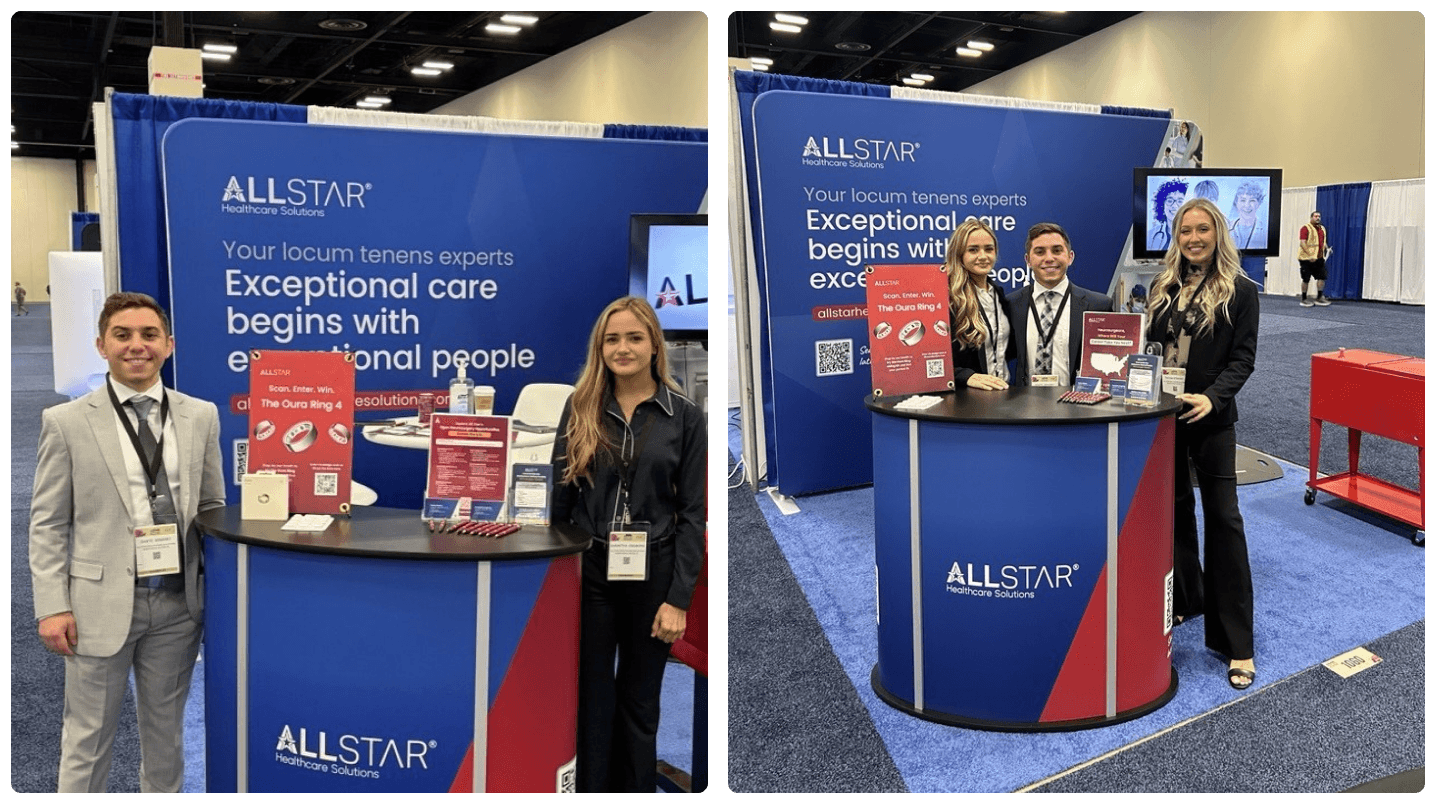
From May 1–4, 2026, members of the All Star Healthcare Solutions Surgery Subspecialties team attended the AANS Annual Scientific Meeting in San Antonio, connecting with neurosurgeons from academic medical centers, community hospitals, and private practices across the country.
While the meeting showcased the latest clinical advancements, another theme consistently emerged:
Many neurosurgeons are re-evaluating what long-term sustainability in the specialty truly looks like.
Across conversations at our booth, physicians repeatedly discussed challenges related to workload, call burden, workforce shortages, compensation, and maintaining career flexibility in an increasingly demanding field.
At the same time, many neurosurgeons were also exploring how alternative practice models — including locum tenens — could offer greater autonomy, scheduling flexibility, and long-term career balance.
If you couldn’t attend AANS this year — or simply want a closer look at the conversations many neurosurgeons were having — here’s what stood out most.
Neurosurgeons Continue Facing Growing Workforce and Burnout Pressures
Across our conversations at AANS, several challenges surfaced repeatedly.
For many physicians, these weren’t abstract workforce discussions — they were day-to-day realities affecting both their professional responsibilities and personal lives.
Common themes included:
- Heavy call schedules and unpredictable hours
- Growing workload demands and patient volume
- Compensation concerns relative to case complexity and intensity
- Difficulty maintaining work-life balance
- Staffing shortages and stretched coverage teams
Current research underscores the severity of these challenges.
Recent workforce projections published in the Journal of Neurosurgery suggest demand for neurosurgical care could increase by 18% through 2037, driven by an aging population and rising rates of neurological disease, while workforce growth is projected at just 2.4%.
At the same time, a 2026 systematic review and meta-analysis published in Neurosurgical Review found burnout affects nearly 45% of neurosurgical professionals, with excessive workload, long hours, sleep deprivation, and poor work-life balance identified among the most common contributing factors.
Growing Interest in Flexibility and Alternative Practice Models
Against that backdrop, many conversations naturally shifted toward flexibility and alternative practice structures — particularly locum tenens.
In a specialty often defined by demanding schedules, trauma coverage, and high-acuity cases, many physicians were interested in how locum tenens could support greater control over their schedules and long-term career goals.
What often began as casual booth conversations evolved into more practical discussions around:
- Assignment structure
- Call coverage expectations
- Scheduling flexibility
- Geographic preferences
- Income supplementation
- Career sustainability and burnout prevention
Many neurosurgeons were especially interested in the ability to maintain involvement in complex clinical work while gaining more autonomy over how and where they practice.
For some physicians, locum tenens represented an opportunity to explore different practice environments. For others, it offered a way to supplement income alongside an existing full-time role, reduce administrative burden, or create greater work-life balance.
The conversations reflected a broader theme heard throughout AANS: flexibility is becoming increasingly important to many physicians across the specialty.
Common Questions and Misconceptions About Locum Tenens
Even with growing interest in locum tenens neurosurgery opportunities, several misconceptions consistently surfaced throughout our conversations. We took the time to set the record straight:
One of the most common concerns centered around stability.
Some physicians assumed locum tenens work is unpredictable or inconsistent. In reality, many assignments are scheduled well in advance with clearly defined timeframes, while long-term and repeat opportunities are becoming increasingly common as healthcare systems face ongoing coverage shortages.
Another misconception was that locum tenens is primarily designed for physicians early in their careers or approaching retirement.
However, many mid-career neurosurgeons are increasingly exploring locum opportunities to gain more schedule flexibility, experience different practice settings, and add greater variety to their careers without stepping away from complex clinical work.
Physicians also frequently asked whether pursuing locum tenens requires leaving a current full-time position.
While some neurosurgeons choose locum tenens full-time, others take assignments alongside existing roles to supplement income, support high-need hospitals, explore new practice environments, or help fill temporary staffing gaps.
Physicians also asked practical questions about how locum tenens arrangements are structured.
In most cases, locum tenens providers work as independent contractors rather than employees, which can offer greater flexibility when choosing assignments, schedules, and practice locations while maintaining more control over long-term career decisions.
Overall, many physicians left those conversations with a broader understanding of how locum tenens can fit into different career stages, schedules, and long-term professional goals.
Why Specialty-Specific Recruiting Matters in Neurosurgery
Conversations at AANS also reinforced how important specialty-specific recruiting knowledge has become within neurosurgery.
Physicians frequently discussed the importance of working with consultants who understand the realities of the specialty — from trauma call demands and subspecialty alignment to credentialing complexity and evolving workforce trends.
Many neurosurgeons also emphasized that career goals are highly individualized. Some physicians are prioritizing compensation and procedural volume, while others are focused on geographic preferences, reduced burnout, or better long-term balance.
Because All Star’s Surgery Subspecialties team works exclusively within surgical fields like neurosurgery, consultants develop a deeper understanding of both the clinical demands of the specialty and the factors influencing physicians’ career decisions.
Those conversations also gave our team the opportunity to discuss the All Star Advantage, including:
- Licensing and credentialing support
- Travel and housing coordination
- Malpractice coverage
- Dedicated consultant guidance throughout the locums process
For many physicians, those operational details play an important role in determining whether locum tenens feels realistic and manageable alongside a highly complex specialty like neurosurgery.
Explore Neurosurgery Locum Tenens Opportunities
If conversations at AANS 2026 made anything clear, it’s that many neurosurgeons are currently thinking about how to build more flexibility and sustainability into long-term practice.
For some physicians, locum tenens is increasingly becoming part of that conversation.
Whether you’re actively searching or simply exploring future options, locum tenens neurosurgery can offer opportunities for greater freedom and flexibility.
If we didn’t get the chance to connect at AANS, it’s not too late — submit your CV or explore All Star’s open neurosurgery opportunities today.

Urologist Salary Guide
Whether you are finishing residency, evaluating a new job offer, or considering a move to locum tenens, understanding the urology compensation landscape helps you make confident, well-informed career decisions. This guide covers national averages, salary by state and practice setting, subspecialty breakdowns, locum tenens rates, total compensation components, and the factors that drive real-world pay differences.
Quick Facts: Urologist Compensation 2026
Average annual salary: $400,000 to $600,000+
Starting (entry-level) salary: approximately $330,000
Top earners (90th percentile): $700,000+
Highest-paying subspecialty: Urologic Oncology
Top-paying states: California, New York, Washington, Texas, Arizona
Urologist Salary Overview
Urologist compensation varies based on subspecialty training, practice setting, geographic location, and years of experience. The most widely cited average is $529,140 per year, based on full-time physician survey data from the Doximity 2024 Physician Compensation Report.
Base salary is typically only part of the picture: verified physician salary data from SalaryDr shows that 88 percent of urologists receive bonus or incentive compensation, with a median bonus of $90,000 annually — meaning total compensation regularly exceeds base salary by a meaningful margin once productivity bonuses, sign-on payments, relocation allowances, and call stipends are factored in.
This section breaks down how experience level, geographic region, and practice setting influence earning potential for both locum tenens and permanent urology positions.
Compensation By Experience Level
Compensation grows substantially with experience in urology, driven by panel growth, surgical volume, and increasing leverage in negotiations. Entry offers are often structured as base salary plus a ramp to productivity pay in year two, giving new physicians time to build their patient panel while protecting their income floor.
| Career Stage | Annual Salary Range |
|---|---|
| Entry-level (0 to 2 years post-training) | $280,000 to $360,000 |
| Mid-career (3 to 8 years) | $400,000 to $580,000 |
| Senior/established (9+ years) | $580,000 to $700,000+ |
Top-Paying Regions for Urologists
Geographic location remains one of the single largest drivers of urologist salary. A urologist in California can earn $40,000 to $75,000 more annually than the national average, driven by demand from large health systems and a limited supply of subspecialists. High cost-of-living metros like San Jose and New York City pay top rates partly to offset living expenses. Underserved rural and Midwest markets often compete aggressively with signing bonuses and loan repayment to attract candidates where demand outstrips supply.
| State / Market | Estimated Average Annual Salary |
|---|---|
| California | $575,000 |
| New York | $540,000 |
| Washington | $530,000 |
| Texas | $515,000 |
| Arizona | $510,000 |
| Florida | $495,000 |
| Midwest (rural) | $480,000 to $540,000+ with incentives |
| Southeast (rural) | $460,000 to $530,000+ with incentives |
Estimates based on Doximity regional compensation data.
All Star Healthcare Solutions connects urologists with opportunities across all 50 states, matching your subspecialty expertise and geographic preferences with positions that align with your compensation goals and lifestyle priorities.
By Practice Setting
Where you work shapes not just your base salary but the entire structure of your compensation package. Hospital-employed urologists typically work under a wRVU (work relative value unit) model, where a base salary is supplemented by productivity bonuses once an annual threshold is met. Most urologists generate between 8,000 and 12,000 wRVUs per year, with compensation rates typically ranging from $60 to $80 per wRVU above threshold, per MGMA Physician Compensation and Production Survey benchmarks.
| Practice Setting | Compensation Notes |
|---|---|
| Hospital or health system (employed) | Base salary plus wRVU productivity model; comprehensive benefits included |
| Private group practice | Higher earning potential through profit sharing; overhead responsibility |
| Academic medical center | Below-market base offset by research funding, teaching flexibility, and complex case access |
| VA or government facility | Stable base; no call burden; limited income ceiling |
| Locum tenens | Highest effective annual compensation; housing and travel covered separately; no employer benefits included |
Urology Subspecialty Salary Comparison
Subspecialty training commands a meaningful compensation premium across urology, reflecting the additional fellowship training required and the limited supply of specialists in each area. Understanding these differences helps guide fellowship decisions and long-term career planning.
| Subspecialty | Estimated Annual Compensation |
|---|---|
| Urologic Oncology | $600,000 to $700,000+ |
| Robotic and Minimally Invasive Surgery | $580,000 to $650,000 |
| Female Pelvic Medicine and Reconstructive Surgery | $540,000 to $620,000 |
| Pediatric Urology | $510,000 to $590,000 |
| Male Infertility and Andrology | $480,000 to $560,000 |
| General Urology | $400,000 to $580,000 |
Note: Robotic surgery expertise is increasingly valued across all subspecialties and commands a premium even outside formal subspecialty fellowships.
Locum Tenens Urologist Salary
Locum tenens urology positions offer some of the most competitive compensation structures in the specialty. Urologists working locum tenens arrangements typically earn the equivalent of $360,000 to $570,000 per year on a full-time basis, with housing and travel covered separately. This structure gives locum physicians a clear financial advantage over permanent roles when comparing equivalent hourly rates, though it requires factoring in the absence of employer-sponsored benefits such as health insurance, malpractice tail coverage, and retirement contributions.
Locum tenens assignments in urology range from short-term coverage of one to four weeks to extended placements lasting six months or longer. Rural and underserved markets often offer the highest rates due to demand pressure and limited candidate pools. In high-need rural markets, urologist locum compensation has reached the equivalent of $625,000 per year or higher for short-notice or hard-to-fill assignments.
Locum tenens urology is an especially strong fit for physicians who:
- Want to explore different practice environments before committing to a permanent role
- Are approaching the end of a contract and need bridge income
- Want to reduce their schedule without fully leaving clinical practice
- Have recently completed training and want geographic flexibility before settling
How Urologist Salary Compares to Other Physician Specialties
Urology ranks consistently in the top tier of physician compensation nationally, typically placing in the top 10 specialties by average salary. The data below reflects the premium that surgical specialties command over cognitive specialties, with urology occupying a strong position driven by procedural volume, robotic surgery demand, and an aging patient population.
| Specialty | Estimated Average Annual Salary |
|---|---|
| Neurosurgery | $788,000 |
| Orthopedic Surgery | $737,000 |
| Urologic Oncology | $650,000+ |
| Plastic Surgery | $629,000 |
| Cardiology | $592,000 |
| Urology (General) | $529,000 |
| Gastroenterology | $511,000 |
| Radiology | $500,000 |
| Anesthesiology | $462,000 |
| Internal Medicine | $264,000 |
For a full breakdown of compensation in adjacent surgical specialties, see the Anesthesiologist Salary Guide, Radiologist Salary Guide, and Cardiologist Salary Guide.
Key Compensation Factors
Beyond experience level, location, and practice setting, several additional factors significantly impact urologist compensation and overall career satisfaction. Understanding these elements empowers you to evaluate opportunities holistically and negotiate packages that align with your professional goals and personal priorities.
Education and Certifications
Advanced credentials directly impact urologist compensation. Board certification by the American Board of Urology (ABU) is the baseline expectation for competitive compensation. Subspecialty fellowship training in urologic oncology, robotic surgery, or female pelvic medicine typically increases compensation by 15 to 25 percent, translating to $50,000 to $150,000 in additional annual earnings. Providers with robotic surgery expertise command a premium across all subspecialties, reflecting facility demand for da Vinci-trained urologists and the limited supply of fellowship-trained robotic surgeons. Sign-on bonuses typically range from $20,000 to $75,000, with higher amounts offered for rural or underserved markets.
Practice Factors
Day-to-day practice characteristics including call schedules, case complexity, employment structure, and administrative responsibilities all influence total urologist compensation.
Call Requirements: Positions with extensive overnight and weekend call typically offer 15 to 25 percent higher base compensation or separate call stipends. Locum tenens call coverage often commands premium compensation above standard contract pay.
wRVU Models and Productivity Bonuses: Most hospital-employed urologists work under a base-plus-productivity structure. Understanding your wRVU threshold and per-unit rate before signing is one of the highest-impact negotiation levers available. Most urologists generate 8,000 to 12,000 wRVUs per year, with compensation rates of $60 to $80 per wRVU above threshold.
Employment Structure: Independent contractor (1099) urologists typically earn higher effective hourly rates than W-2 employees, though with different tax implications and the need to self-fund benefits. Partnership-track positions in private practice offer lower starting salaries but significant long-term earning potential through profit-sharing.
Administrative Responsibilities: Medical director and department leadership roles typically add $25,000 to $75,000 in stipends beyond clinical compensation. Locum tenens positions minimise administrative burden, allowing focus on clinical work and maximising compensated time.
Market Demand
Demand for urologists is accelerating. The American Urological Association reports that more than 60 percent of all U.S. counties have no practicing urologist, and approximately 40 percent of the current urology workforce will reach retirement age within the next decade.
The Bureau of Labor Statistics projects overall physician and surgeon employment to grow 3 percent from 2024 to 2034, but urology's demand trajectory is stronger than the overall physician average due to an aging patient population with increasing rates of urological conditions including prostate cancer, kidney stones, and urinary incontinence. Rural and mid-sized markets are experiencing the most acute shortages, translating directly into more competitive compensation offers and larger signing packages.
Urgent coverage needs — particularly for subspecialists in urologic oncology and robotic surgery — frequently command premium rates of 15 to 30 percent above standard compensation, creating exceptional opportunities for flexible providers.
The All Star Advantage
Competitive compensation matters, but it represents just one element of your career satisfaction and long-term success. At All Star Healthcare Solutions, we partner with urologists to maximise not just earning potential, but overall career fulfillment, backed by ClearlyRated 2026 Best of Staffing recognition and more than two decades placing physicians and advanced practitioners nationwide. Whether you are exploring your first locum assignment, evaluating a permanent offer, or building a long-term career strategy across urology subspecialties, here is how we support your success.
Expert Compensation Negotiation and Market Intelligence
Our consultants have real placement data across urology subspecialties, states, and practice settings. We negotiate on your behalf to secure competitive pay and clarify the full package, from wRVU thresholds and call stipends to malpractice coverage and sign-on terms. This means you focus on choosing the right opportunity while we ensure you are fairly compensated for your skills, training, and experience.
Comprehensive Credentialing and Licensing Support
We manage the urology credentialing process from start to finish, handling document collection, primary source verification, and direct communication with facility credentialing offices. For subspecialists requiring additional privileging for robotic surgery or oncologic procedures, we handle specialty-specific requirements so you can focus on patient care rather than paperwork.
Flexible Assignment Options Matching Your Goals
Whether you need short-term locum coverage between permanent roles, an extended contract to evaluate a new market, or a permanent placement aligned with your subspecialty training, our consultants take time to understand your clinical focus, schedule preferences, and geographic priorities before presenting options. We match to your goals, not our open orders.
24/7 Dedicated Support Throughout Your Assignment
Your assigned consultant remains your advocate from initial conversation through the end of every assignment, available around the clock for urgent matters and checking in regularly to ensure your experience meets expectations. Challenges that arise during assignments are addressed proactively, before they become issues, and our consultants build career-long partnerships that adapt as your goals evolve.
Ready to Explore Urology Opportunities?
Whether you are finishing residency, evaluating a new permanent offer, or ready to find out what locum tenens looks like for your subspecialty and preferred region, All Star Healthcare Solutions is here to guide you through every step. Our urology consultants understand the compensation landscape across all 50 states, from high-volume academic centers to rural markets offering premium rates, and will match you with positions that align with your clinical goals, lifestyle preferences, and earning potential. Connect today to discuss your options.
Frequently Asked Questions About Urologist Salary
Why is urology so highly paid?
Urology commands above-average physician compensation because of the combination of extensive training (4 years of medical school, 5-year residency, and optional fellowship), high procedural volume including robotic-assisted surgeries, and significant demand driven by an aging patient population. The specialty requires both cognitive expertise and surgical skill, which is reflected in compensation.
What is the starting salary for a urologist?
The starting salary for urology sits at approximately $330,000. This baseline does not include sign-on bonuses, relocation, productivity bonuses, or other compensation components that are typically added on top.
Do urologists make more in private practice or hospitals?
Private group practice offers higher earning potential through profit sharing and direct control over overhead, but comes with greater financial risk and administrative responsibility. Hospital employment provides income stability and a predictable benefits package, but it typically caps upside compared to successful private practice ownership. The right answer depends on your career stage, risk tolerance, and interest in practice management.
How much does a locum tenens urologist make?
Locum tenens urologist compensation typically ranges from the equivalent of $360,000 to $570,000 per year on a full-time basis, with housing and travel covered as separate line items. High-demand rural markets and short-notice assignments can push compensation toward the top of this range or above it.
What urologist subspecialty pays the most?
Urologic oncology and robotic surgery specialists consistently earn the highest compensation, with urologic oncologists averaging $600,000 to $700,000 or more annually. Female pelvic medicine and reconstructive surgery specialists and pediatric urologists also command subspecialty premiums above general urology rates.
What is included in locum tenens urologist compensation beyond base pay?
Locum tenens packages typically include malpractice insurance with full tail coverage, housing stipends or furnished accommodations, travel reimbursement, medical licensing support, and credentialing assistance. Payment is usually weekly or bi-weekly. These benefits add an estimated 20 to 30 percent to effective total compensation when comparing locum tenens to permanent positions. All Star consultants provide detailed package breakdowns so you can compare total value across opportunities, not just headline rates.
How do wRVUs work in urologist compensation?
A wRVU (work relative value unit) measures physician productivity based on time, skill, and case complexity. Most hospital-employed urologists work under a base-plus-productivity model, earning bonus pay once an annual wRVU threshold is met. Most urologists generate 8,000 to 12,000 wRVUs per year, with compensation rates of $60 to $80 per wRVU above threshold per MGMA benchmarks. Understanding your threshold and per-unit rate before signing is one of the highest-impact negotiation levers in any employed urology contract.
Does robotic surgery fellowship training increase a urologist's earning potential?
Yes. Fellowship-trained robotic and minimally invasive surgery urologists typically earn $580,000 to $650,000 annually, compared to $400,000 to $580,000 for general urology. Facilities investing in da Vinci programs actively recruit fellowship-trained urologists and compensate accordingly. The premium reflects both the technical expertise required and the limited supply of fellowship-trained robotic surgeons in the current market.
Data Sources
- Doximity Physician Compensation Report 2024
- American Urological Association, Workforce Shortage Data
- Bureau of Labor Statistics, Occupational Employment and Wage Statistics: Physicians and Surgeons

2026 Locum Tenens Salary by Specialty Guide
Locum tenens compensation varies more by specialty than almost any other factor in physician pay. An emergency medicine physician and a family medicine physician can be working the same 40-hour week for the same hospital system and earning vastly different amounts.
Whether you're already working locum assignments and looking to maximize what each placement returns, evaluating a switch from your current agency, or finishing training and considering locum tenens as an early-career path, knowing what your specialty realistically commands in the current market is essential for evaluating any opportunity.
This guide covers locum tenens pay across physician specialties and advanced practice roles, explains what shapes the numbers, addresses the tax reality that most salary guides skip, and gives you a practical framework for evaluating compensation in your specialty.
Quick Facts: Locum Tenens Compensation 2026
- Full-time locum tenens physicians earn the equivalent of $200,000 to $830,000 or more annually, depending on specialty, location, and assignment type
- The highest-compensated locum specialties are neurosurgery, cardiovascular/thoracic surgery, anesthesiology, and hematology & oncology, with full-time equivalent annual earnings reaching $830,000
- Hematology & oncology is consistently among the highest-demand locum specialties, with top-end placements approaching the upper bound of the physician compensation range
- Rural and underserved markets typically pay a 10–25% premium over urban centers across most specialties
- Most locum assignments include housing, travel, and malpractice coverage in addition to base pay, adding $20,000–$40,000 in effective compensation annually
- Locum tenens providers work as 1099 independent contractors, paying 15.3% self-employment tax on net income
- The Interstate Medical Licensure Compact, with more than 40 member states, is the primary mechanism most locum physicians use to access multi-state placements efficiently
Locum Tenens Compensation Overview
Locum tenens providers are paid per clinical hour worked, not on a fixed annual salary. Pay applies to scheduled clinical hours only, not administrative time, chart review outside of shift hours, or unpaid call coverage. Throughout this guide, we present typical earnings as full-time equivalent annual figures to make them directly comparable to permanent salary benchmarks. The annualization assumes approximately 2,000 clinical hours per year, which is a reasonable benchmark for a provider working consistent locum assignments.
What pay alone does not show is the full compensation picture. Most locum assignments also include a housing stipend or fully covered accommodations at the assignment location, round-trip travel reimbursement, and malpractice insurance coverage for the duration of the assignment. When you aggregate those benefits, the effective value of a locum assignment is often 15 to 25 percent higher than the headline figure suggests. A physician earning the equivalent of $400,000 annually with housing and travel covered is receiving meaningfully more than a physician earning the equivalent of $430,000 annually who is covering those costs independently.
Three structural factors shape where you sit within your specialty's compensation range. Geography is the largest single lever: rural and underserved markets pay a 10 to 25 percent premium because they must, while urban academic medical centers typically have more applications for fewer positions and less compensation pressure. Practice setting matters next: Level I trauma centers, high-volume emergency departments, and complex surgical hospitals pay more than outpatient clinics or low-acuity urgent care settings. Experience and credentials shape access to the upper end of any specialty range, with board-certified providers and those with documented procedural volume consistently accessing premium positions.
Locum Tenens Salary by Specialty: Physician Pay
The tables below reflect typical full-time equivalent annual earnings for locum tenens physicians across specialties. Locum compensation is set per clinical hour worked, so the figures here annualize at approximately 2,000 clinical hours per year. Presented this way, the figures are directly comparable to permanent salary benchmarks reported in surveys like the Medscape Physician Compensation Report and the Doximity Physician Compensation Report. These ranges represent typical market conditions as of 2025–2026 and individual compensation varies based on the factors described in this guide.
Primary Care and Generalist Specialties
| Specialty | Equivalent Annual Earnings (FTE) | Notes |
|---|---|---|
| Family Medicine | $210K–$300K | Strong demand in rural and underserved markets |
| Internal Medicine | $230K–$330K | Hospitalist roles drive significant volume |
| Hospitalist (General) | $230K–$310K | High placement volume; schedule often 7 on/7 off |
| Pediatrics (General) | $200K–$290K | Demand highest in outpatient and rural settings |
| Urgent Care | $190K–$280K | Broad supply of providers; consistent volume of positions |
Primary care and generalist roles offer something that higher-compensation specialties often do not: volume and scheduling predictability. The number of available locum placements in family medicine and internal medicine is significantly larger than in subspecialty medicine. For providers who prioritize schedule consistency and geographic flexibility over peak earnings, primary care locum work is a highly viable long-term strategy.
Emergency and Acute Care
| Specialty | Equivalent Annual Earnings (FTE) | Notes |
|---|---|---|
| Emergency Medicine (ABEM) | $450K–$620K | Premium for board certification is consistent across markets |
| Emergency Medicine (Non-ABEM) | $340K–$470K | Strong demand; gap vs. ABEM is narrowing in high-need markets |
| Critical Care / Intensivist | $430K–$590K | High-acuity shifts; demand driven by ICU coverage needs |
| Trauma Surgery | $500K–$690K | Short supply of qualified locum providers; compensation reflects scarcity |
Emergency medicine is the specialty most frequently cited by physicians exploring locum work. In a Sermo physician survey, 55 percent of physicians named emergency medicine as their preferred specialty for locum practice, ahead of internal medicine at 22 percent and anesthesiology at 12 percent. The combination of strong compensation, shift-based scheduling with clear start and end times, and near-universal demand makes emergency medicine one of the most structurally suited specialties for locum practice. The ABEM certification premium is real and consistent, typically adding the equivalent of $80,000 to $140,000 per year over non-ABEM equivalent roles. For a deeper breakdown, see All Star's Emergency Medicine Salary Guide.
Surgical Specialties
| Specialty | Equivalent Annual Earnings (FTE) | Notes |
|---|---|---|
| General Surgery | $450K–$620K | 7-day blocks common; service line coverage drives demand |
| Orthopedic Surgery | $480K–$700K | Sub-specialty focus (spine, joint, trauma) affects compensation |
| Otolaryngology (ENT) | $390K–$540K | Procedural subspecialty; sinus and head/neck procedural volume drives locum demand |
| OB-GYN | $390K–$570K | Demand driven by labor and delivery coverage needs |
| Pediatric Surgery | $480K–$720K | Tertiary children's hospitals and pediatric service line coverage drive demand |
| Cardiovascular/Thoracic Surgery | $570K–$780K | Very limited supply; top of the surgical compensation range |
| Neurosurgery | $590K–$830K | Highest-compensated surgical specialty in most markets |
Surgical locum assignments typically run in 7-day blocks that combine OR time, clinic, and call responsibilities. Hospital service line closures and recruitment-driven coverage gaps are major demand drivers across surgical specialties, particularly for general surgeons and pediatric surgeons covering rural critical access hospitals and tertiary children's hospitals where surgical service is otherwise at risk. Assignment lengths of one to three months are standard, with longer placements available at facilities managing extended coverage gaps. The premium for procedural volume applies here: a general surgeon covering a high-volume trauma OR earns toward the top of the range; one covering a low-acuity outpatient surgical center earns toward the bottom.
Medical Specialties and Subspecialists
| Specialty | Equivalent Annual Earnings (FTE) | Notes |
|---|---|---|
| Anesthesiology | $570K–$830K | Demand consistently outpaces supply in most markets |
| Cardiology (Invasive/Interventional) | $470K–$680K | Cath lab and PCI volume drives premium over non-invasive |
| Cardiology (Non-Invasive) | $350K–$520K | Echo, stress, nuclear interpretation roles |
| Radiology (Diagnostic) | $390K–$570K | Teleradiology roles expand geographic flexibility |
| Gastroenterology | $430K–$610K | Endoscopy volume a key compensation driver |
| Hematology & Oncology | $400K–$830K | Among highest-demand locum specialties; top-end placements approach physician compensation ceiling |
| Dermatology | $330K–$490K | Strong outpatient demand; Mohs expertise commands premium |
| Neurology | $330K–$490K | Telestroke roles increasing availability and flexibility |
| Psychiatry | $350K–$520K | Severe shortage markets; telehealth roles widely available |
| Nephrology | $310K–$470K | Dialysis and hospital consult roles both available |
| Urology | $390K–$550K | Geographic shortage drives consistent locum demand |
| Endocrinology | $270K–$390K | Lower compensation range; consistent demand in underserved markets |
Anesthesiology and hematology & oncology sit at the top of the medical subspecialty compensation range. Hematology & oncology is consistently among the highest-demand specialties in locum staffing, with top-end placements at high-volume infusion centers and specialized cancer programs approaching the upper bound of the physician compensation range. Anesthesiology demand consistently outpaces supply in most markets, particularly for surgical center and trauma center coverage. Compensation in this guide for radiology refers to physician radiologists (MD/DO board-certified by the American Board of Radiology), not radiologic technologists or imaging technicians; teleradiology roles are a structural advantage unique in locum medicine, allowing diagnostic radiologists to work remotely across multiple facilities simultaneously, which changes the economics of part-time locum work significantly.
Demand for locum urologists is structurally high: the American Urological Association reports that more than 60 percent of U.S. counties have no practicing urologist, creating sustained coverage gaps that locum providers fill across rural and underserved metro markets alike. Psychiatry is notable for the combination of severe shortage conditions and expanding telehealth availability, making it an unusually accessible specialty for flexible locum arrangements.
For detailed salary breakdowns by specialty, see All Star's specialty salary guides for anesthesiologists, cardiologists, radiologists, gastroenterologists, hematology and oncology physicians, and urologists.
Locum Tenens Pay for Advanced Practice Providers
All Star Healthcare Solutions also places advanced practice providers — CRNAs, nurse practitioners, and physician assistants — across multiple specialties. Physician placements are All Star's primary focus, and the APP locum market complements rather than substitutes for that work. The market for APP locum placements is strong and expanding, driven by the same physician shortage dynamics that fuel physician locum demand. CRNAs in particular access compensation approaching the physician range in high-demand markets.
| Role | Equivalent Annual Earnings (FTE) | Notes |
|---|---|---|
| CRNA | $350K–$510K | Highest-earning APP in locum placements; approaches physician range |
| Psychiatric NP | $160K–$260K | Acute shortage markets; telepsych roles available |
| Surgical PA | $150K–$230K | First-assist OR roles; specialty-trained PAs access higher compensation |
| Family Practice NP | $130K–$200K | Volume of positions is high; rural premium applies |
CRNAs are the highest-earning APPs in locum placements, with full-time equivalent earnings that approach the physician range in high-demand markets. For NPs and PAs, compensation varies significantly by specialty and by state. Independent practice authority states, where NPs can practice without physician supervision, typically offer higher compensation for NPs because facilities can deploy them in a broader range of roles. Surgical PAs with documented first-assist experience and subspecialty training access higher compensation than generalist PAs.
A note for nurse practitioners: All Star does not place NPs in California due to that state's W-2 employment requirements for NP locum work. NP placements are available in all other states.
How Locum Tenens Compensation Compares to Permanent Salaries
The comparison between locum compensation and a permanent employed position is not as simple as comparing per-hour figures to annual salaries. Three factors consistently shift the calculation in locum's favor for providers who understand them.
The effective compensation premium adds real dollar value beyond the headline figure. Housing, travel, and malpractice coverage included in a locum package mean a provider on a six-month assignment with fully covered accommodations is not paying rent or commuting costs at a second location. Aggregate those benefits across a full year and the value typically ranges from $20,000 to $40,000 above the headline figure, based on typical housing stipends of $2,000–$3,000 per month and round-trip travel reimbursements across a standard locum placement.
The earnings ceiling is higher in locum work than in W-2 employment. Recent Medscape and Doximity compensation reports place average employed physician earnings in the low $300,000 range across most specialties, with primary care below that benchmark and procedural specialties above it. A locum provider working consistent assignments in a high-demand specialty can meaningfully increase annual earnings beyond those benchmarks by choosing higher-compensation markets, adding short-notice flexibility, or accumulating experience that unlocks access to premium positions.
The trade-offs are real, however, and need to be accounted for accurately. Locum providers receive no employer benefits: no health insurance contribution, no retirement match, no paid time off. Self-employment taxes add to the cost. Bureau of Labor Statistics data on civilian employer costs places the value of benefits at approximately 30 percent of total compensation for management and professional roles, which is the practical reason a locum provider needs to account for roughly 15 to 25 percent more in gross earnings to net the same take-home value as a salaried position with comparable benefits.
| Comparison Point | Locum | Permanent W-2 |
|---|---|---|
| Base pay structure | Per clinical hour worked | Annual salary |
| Housing/travel | Typically covered by agency | Not covered |
| Malpractice | Typically covered by agency | Covered by employer |
| Health insurance | Provider's responsibility | Employer contribution |
| Retirement | Provider's responsibility | Employer match |
| Self-employment tax | 15.3% on net income | Half paid by employer |
| Schedule flexibility | High | Lower |
| Earnings ceiling | No cap | Often capped by contract |
For most physicians in high-demand specialties working consistent locum assignments, total compensation exceeds what a salaried permanent position offers. The breakeven calculation shifts toward locum faster than most providers expect once the full package is counted.
Key Compensation Factors
Beyond specialty, location, and practice setting, several additional factors shape what a locum provider earns. Understanding them helps you evaluate offers accurately and identify where you have negotiating leverage.
Education & Certifications
Board certification is the baseline expectation for competitive locum tenens compensation across most specialties. Subspecialty fellowship training in procedural areas — interventional cardiology, regional anesthesia, surgical oncology, telestroke neurology — commands meaningful premiums over generalist board-certified equivalents. The Interstate Medical Licensure Compact, with more than 40 member states, streamlines multi-state licensing and is the primary mechanism most locum physicians use to access higher-compensation positions across multiple states.
Practice Factors
Day-to-day practice characteristics shape compensation significantly. Call requirements, including overnight and weekend coverage, add to effective compensation through hourly premiums or per-call stipends. Patient volume and acuity matter: high-volume trauma centers and complex surgical hospitals pay top-of-range, while low-acuity outpatient settings sit at the lower end. Locum assignments typically minimize the administrative burden of permanent roles, allowing providers to focus on clinical work.
Market Demand
Locum tenens demand is driven by the persistent national physician shortage, which the Association of American Medical Colleges projects will reach up to 86,000 unfilled positions by 2036. Industry estimates indicate that approximately 85 percent of U.S. hospitals use locum tenens coverage to maintain consistent patient access during physician recruitment cycles, leave situations, seasonal volume fluctuations, and service line closures or restructurings. Urgent coverage needs typically pay 10 to 20 percent above standard market compensation, creating opportunities for providers with schedule flexibility.
Tax and Financial Considerations for Locum Providers
Locum tenens providers work as 1099 independent contractors. No employer withholds federal or state income tax from your pay. No employer covers half of your Social Security and Medicare contributions. This is the most practically significant financial difference between locum and employed work, and the most consistently skipped topic in every locum salary guide on the internet.
Self-employment tax is 15.3 percent on top of income tax. W-2 employees pay 7.65 percent of this (the employee share of FICA), with the employer covering the other 7.65 percent. As a 1099 contractor, you pay both sides. On $200,000 in net locum income, that is approximately $30,600 in self-employment tax before income tax is even calculated.
You are responsible for quarterly estimated tax payments. The IRS expects self-employed individuals to pay estimated taxes four times per year. Missing or underpaying these can result in underpayment penalties in addition to the underlying tax liability. This is not optional. Work with a CPA who specializes in physician finances to set your quarterly payment schedule from day one.
The offsets are meaningful. The 1099 structure that creates the tax burden also creates deductibility options that W-2 employees do not have. Business expenses that are ordinary and necessary to your locum practice are generally deductible. These include licensing fees, professional association dues, continuing medical education, and in some cases business travel and equipment. Malpractice coverage that you pay independently is typically deductible. High-income earners should evaluate whether an S-Corporation election makes sense, as it can reduce self-employment tax liability significantly at certain income levels.
This section is not tax advice. Physician tax situations are individual and variable. Before your first locum assignment, consult a CPA with experience in physician independent contractor arrangements.
The All Star Advantage
Competitive compensation is one piece of career satisfaction. With more than two decades placing locum providers across 85 specialties in all 50 states, All Star Healthcare Solutions supports providers across every dimension of locum practice — from compensation negotiation to credentialing to assignment matching to ongoing support. Here's what sets us apart.
Expert Compensation Negotiation and Market Intelligence
Our consultants work with real placement data across specialties, states, and facility settings. We negotiate on your behalf and clarify the full package, from housing stipends to CME allowances to malpractice coverage. If a quoted figure sits below the ranges shown in this guide for your specialty and geography, your consultant will walk through the assignment specifics that justify the offer or negotiate appropriate adjustments.
Comprehensive Credentialing and Licensing Support
We manage the entire credentialing process from start to finish, handling document collection, primary source verification, and direct communication with facility credentialing offices. We coordinate Interstate Medical Licensure Compact filings for eligible physicians and manage state-by-state licensing for those outside IMLC scope, removing a substantial administrative burden from the provider's side.
Flexible Assignment Options Matching Your Goals
Whether you want short-term coverage between assignments, an extended contract to evaluate a new market, locum-to-permanent conversion, or a flexible mix of placements, we provide options that match your goals. Our network of more than 150 hospital systems and more than 400 facilities provides access to roles across critical access hospitals, community hospitals, academic centers, and telehealth opportunities.
24/7 Dedicated Support Throughout Your Assignment
Your assigned consultant remains your advocate from initial conversation through the end of every assignment, available around the clock for urgent matters and checking in regularly to ensure your assignment meets expectations. We coordinate housing, travel, and credentialing logistics so you can focus on patient care.
Ready to Explore Locum Tenens Opportunities?
Whether you're already working locum assignments and considering a different agency, evaluating your first locum placement, or building flexible practice into your long-term career plan, All Star Healthcare Solutions can help you understand what your specialty commands in the current market and identify assignments that fit your goals. Our specialty-focused consultants understand the compensation landscape across your practice area, the credentialing and licensing pathways that fit your situation, and what placements are currently available.
When you're ready to talk specifics, we're here.
Connect with a Specialty Consultant
Frequently Asked Questions About Locum Tenens Salary
What is the highest-paid locum tenens specialty?
Neurosurgery, cardiovascular/thoracic surgery, anesthesiology, and hematology & oncology consistently rank at the top of the locum compensation scale, with full-time equivalent annual earnings reaching $830,000 in high-demand markets. The highest figures reflect the combination of procedural complexity, fellowship-level credentials, and consistent national shortages of qualified providers.
How much can a locum tenens physician earn in a year?
A physician working full-time locum assignments, approximately 2,000 clinical hours annually, can earn between $200,000 and $830,000 or more depending on specialty. Emergency medicine physicians working consistent assignments typically earn $450,000 to $620,000. Neurosurgeons or cardiovascular surgeons in high-demand markets can exceed $700,000. Hematology & oncology placements at high-volume centers can reach the upper bound of physician compensation. Primary care physicians and generalists typically earn $200,000 to $330,000. Most physicians working consistent locum assignments earn more per year than they would in a comparable permanent position.
Do locum tenens physicians pay more taxes than salaried doctors?
Yes, locum providers pay self-employment tax of 15.3 percent on net income, in addition to federal and state income tax. W-2 employees share this burden with their employer, who covers half. The practical implication is that a locum provider earning $250,000 pays roughly $38,000 in self-employment tax that a salaried physician at the same gross income does not. Legitimate deductible business expenses offset this partially, and high earners may benefit from an S-Corporation structure. Consult a physician-specialist CPA before your first assignment.
Can nurse practitioners and physician assistants work locum tenens?
Yes. APP locum placements are a significant segment of the market, though physician placements remain All Star's primary focus. CRNAs, psychiatric NPs, surgical PAs, and family practice NPs are among the most actively placed APP roles in locum staffing. CRNAs earn at levels approaching the physician compensation range in many markets. NP and PA compensation varies by specialty, experience, and state practice authority. All Star does not place NPs in California due to that state's W-2 employment requirements; NP placements are available in all other states.
How does locum tenens pay compare to a permanent position?
For most physicians in high-demand specialties, locum tenens work generates higher gross income than a permanent employed position at equivalent hours. The locum compensation premium, combined with covered housing, travel, and malpractice, typically more than offsets the self-employment tax and benefits gap. The comparison is most favorable for providers in procedural specialties, those willing to work in underserved markets, and those with schedule flexibility to take short-notice assignments.
What's the highest-paying state for locum tenens work?
The highest-paying states for locum tenens work are typically those with the most acute provider shortages relative to population. Rural states across the Mountain West (Wyoming, Montana, Idaho), parts of the upper Midwest (North Dakota, South Dakota), and rural areas of Alaska consistently rank at the top for locum compensation premiums across multiple specialties. Within most states, rural and underserved areas pay 15–25% above state metro rates, and certain shortage-designated regions in California, Texas, and Florida also command meaningful premiums.
Do rural locum tenens assignments pay more than urban ones?
Yes, in most specialties rural assignments pay 10–25% above urban baseline compensation, and the premium can reach 30% or more for hard-to-fill subspecialty roles in critical access hospitals. The differential exists because rural facilities have fewer alternative coverage options, often face genuine patient access pressures during coverage gaps, and must compete against urban and metro assignments for the same pool of qualified providers. The trade-off is location and travel; most locum providers find the compensation premium and the often-shorter assignment lengths in rural settings make these placements highly attractive.
What's the difference between agency-placed and direct-hire locum tenens work?
Agency-placed locum tenens work consolidates credentialing, malpractice coverage, housing, travel, gap-filling between assignments, and licensing support through a single staffing partner. Direct-to-facility placement requires the provider to self-manage each of these functions, which adds significant administrative cost and time burden. Agency placement typically produces higher net effective compensation once the cost of self-managing each administrative function is counted, including the value of the provider's own time. Most experienced locum providers work through agencies for these reasons.
Data Sources
- Locumstory 2025 Specialty Compensation Trends
- Sermo Physician Survey on Locum Tenens
- IRS Topic No. 554: Self-Employment Tax
- Association of American Medical Colleges: 2024 Physician Workforce Projections
- American Urological Association: Annual Census
- Bureau of Labor Statistics: Employer Costs for Employee Compensation
- Federation of State Medical Boards: Interstate Medical Licensure Compact

Making the Most of Washington, D.C. During AUA2026
AUA2026 (May 15 – 18, 2026) brings urology’s most influential voices — along with the All Star team — to Washington, D.C. for four days of breakthrough science, education, and connection.
There’s no backdrop more fitting than the nation’s capital — a city defined by big ideas, pivotal decisions, and lasting impact. It’s the kind of place where progress feels tangible — and where even a short break can turn into something memorable.
Whether you’ve got 20 minutes or a few hours to spare, here’s how to make the most of your time in D.C.
When You’ve Got 20–30 Minutes
Sometimes you don’t have time to plan — you just have a gap. That’s enough.
Walk the Capitol Grounds
Looking to reset between sessions? This is one of the simplest ways to do it. Expansive open space, clean architectural lines, and sweeping views of the Capitol create a sense of clarity and perspective. A little fresh air and movement go a long way during a full day indoors.
Step Inside the Library of Congress
A quick stop, but one that leaves a lasting impression. Ornate ceilings, historic reading rooms, and intricate details serve as a quiet reminder that there’s more to this moment than the conference itself. Even a few minutes here feel well spent.
Catch a Glimpse of the White House
You don’t need a full tour to feel the impact. A short walk along Pennsylvania Avenue, a pause at the gates, and the moment is unmistakable — you’re in Washington, D.C.

When You’ve Got an Hour
This is the sweet spot — the time window where you can actually settle into something without rushing it.
Wander the National Gallery of Art
Looking for something worthwhile without overcommitting? This is an ideal choice. More approachable than many of the city’s larger museums, yet impressive in all the right ways — with light-filled galleries, recognizable works, and space to explore without feeling overwhelmed.
Choose One Smithsonian
You won’t see everything — and you don’t need to. Choose one museum, spend an hour, and focus on what draws you in. It’s a simple way to step outside the rhythm of the conference and into something entirely different.
Take in the United States Botanic Garden
Tucked near the Capitol, this spot is easy to overlook — and well worth a visit. Warm, quiet, and filled with greenery, it creates an immediate sense of calm. Spend an hour here, and you’ll leave feeling noticeably more at ease.
Explore Georgetown (Skip the Main Street, Find the Canal)
Georgetown gets crowded fast — but a few steps off the main street, everything changes. The C&O Canal runs quietly behind the storefronts, shaded and calm, with brick paths that offer a welcome distance from the crowds. It’s the kind of place where your pace slows without effort.
Visit the National Zoo
If you’re looking for something outdoors that still feels engaging, the zoo is a strong choice — and perfect for families. Larger than expected, it offers plenty of space to walk, pause, and explore without feeling rushed, even in a short window.

When You’ve Got a Few Hours
If you find a longer stretch of time, this is where the city really opens up.
Get Lost in Rock Creek Park
There comes a point in any conference when everything begins to blur together. This is where you reset. Within minutes, the noise fades, the air shifts, and the rhythm softens. Follow a trail, wander for a bit, and give yourself space to disconnect — the difference is immediate.
Head Out to the National Arboretum
If you have the time and are looking for something quieter, this is well worth the trip. Sprawling grounds, tree-lined paths, and stunning gardens create a setting that feels far removed from downtown. Uncrowded and unhurried, it offers space to move — and a chance to slow down.

After Sessions Wrap
When the day winds down, the city shifts with it.
Grab a Meal at the Wharf
At the end of the day, head to D.C.’s waterfront to unwind. Walkable and easy to navigate, the Wharf offers a wide range of restaurants and open views of the Potomac — an easy place to grab a bite and ease into the evening.
Take a Capitol River Cruise at Sunset
There’s something magical about seeing D.C. from the water at the end of the day. The light softens, the skyline shifts, and the city feels quieter from a distance. It’s an easy way to close things out — unhurried, unplanned, and defined by a different vantage point.
And One More Thing
This is the one most people miss.
The best moments here aren’t always scheduled — an unexpected event, a place you didn’t mean to find, something you almost skipped because you were tired.
In May, D.C. makes those moments easy. Events like Passport DC pop up across the city, and if you can stay an extra day, Fiesta Asia (May 16) brings everything out into the streets — food, music, and a completely different pace from the conference.
You just have to leave a little room for it.

You’re coming to AUA2026 for the sessions — the science, the insights, and the conversations that move the field forward.
But it’s often the moments in between that round out the experience — when you step outside, take a different turn, or make the most of an hour you didn’t expect to have.
While you’re making your way through the conference hall, be sure to visit All Star Healthcare Solutions at booth #2568. We’ll leave the clinical work to you — but when it comes to urology opportunities (and a reminder to stay hydrated), that’s where we come in.
We’ll also be hosting a giveaway for an Oura Ring — stop by to learn more or enter here for your chance to win.