


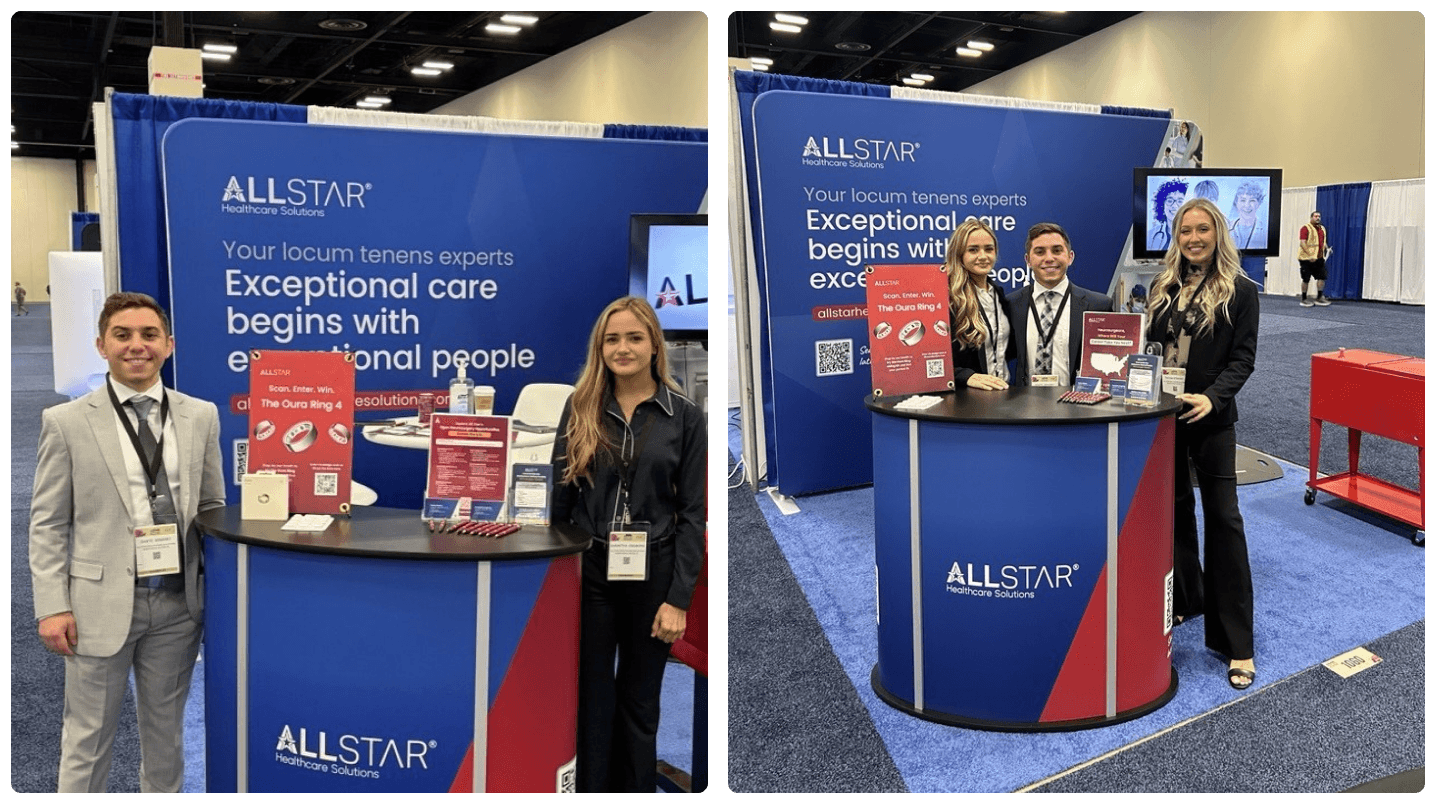
From May 1–4, 2026, members of the All Star Healthcare Solutions Surgery Subspecialties team attended the AANS Annual Scientific Meeting in San Antonio, connecting with neurosurgeons from academic medical centers, community hospitals, and private practices across the country.
While the meeting showcased the latest clinical advancements, another theme consistently emerged:
Many neurosurgeons are re-evaluating what long-term sustainability in the specialty truly looks like.
Across conversations at our booth, physicians repeatedly discussed challenges related to workload, call burden, workforce shortages, compensation, and maintaining career flexibility in an increasingly demanding field.
At the same time, many neurosurgeons were also exploring how alternative practice models — including locum tenens — could offer greater autonomy, scheduling flexibility, and long-term career balance.
If you couldn’t attend AANS this year — or simply want a closer look at the conversations many neurosurgeons were having — here’s what stood out most.
Neurosurgeons Continue Facing Growing Workforce and Burnout Pressures
Across our conversations at AANS, several challenges surfaced repeatedly.
For many physicians, these weren’t abstract workforce discussions — they were day-to-day realities affecting both their professional responsibilities and personal lives.
Common themes included:
- Heavy call schedules and unpredictable hours
- Growing workload demands and patient volume
- Compensation concerns relative to case complexity and intensity
- Difficulty maintaining work-life balance
- Staffing shortages and stretched coverage teams
Current research underscores the severity of these challenges.
Recent workforce projections published in the Journal of Neurosurgery suggest demand for neurosurgical care could increase by 18% through 2037, driven by an aging population and rising rates of neurological disease, while workforce growth is projected at just 2.4%.
At the same time, a 2026 systematic review and meta-analysis published in Neurosurgical Review found burnout affects nearly 45% of neurosurgical professionals, with excessive workload, long hours, sleep deprivation, and poor work-life balance identified among the most common contributing factors.
Growing Interest in Flexibility and Alternative Practice Models
Against that backdrop, many conversations naturally shifted toward flexibility and alternative practice structures — particularly locum tenens.
In a specialty often defined by demanding schedules, trauma coverage, and high-acuity cases, many physicians were interested in how locum tenens could support greater control over their schedules and long-term career goals.
What often began as casual booth conversations evolved into more practical discussions around:
- Assignment structure
- Call coverage expectations
- Scheduling flexibility
- Geographic preferences
- Income supplementation
- Career sustainability and burnout prevention
Many neurosurgeons were especially interested in the ability to maintain involvement in complex clinical work while gaining more autonomy over how and where they practice.
For some physicians, locum tenens represented an opportunity to explore different practice environments. For others, it offered a way to supplement income alongside an existing full-time role, reduce administrative burden, or create greater work-life balance.
The conversations reflected a broader theme heard throughout AANS: flexibility is becoming increasingly important to many physicians across the specialty.
Common Questions and Misconceptions About Locum Tenens
Even with growing interest in locum tenens neurosurgery opportunities, several misconceptions consistently surfaced throughout our conversations. We took the time to set the record straight:
One of the most common concerns centered around stability.
Some physicians assumed locum tenens work is unpredictable or inconsistent. In reality, many assignments are scheduled well in advance with clearly defined timeframes, while long-term and repeat opportunities are becoming increasingly common as healthcare systems face ongoing coverage shortages.
Another misconception was that locum tenens is primarily designed for physicians early in their careers or approaching retirement.
However, many mid-career neurosurgeons are increasingly exploring locum opportunities to gain more schedule flexibility, experience different practice settings, and add greater variety to their careers without stepping away from complex clinical work.
Physicians also frequently asked whether pursuing locum tenens requires leaving a current full-time position.
While some neurosurgeons choose locum tenens full-time, others take assignments alongside existing roles to supplement income, support high-need hospitals, explore new practice environments, or help fill temporary staffing gaps.
Physicians also asked practical questions about how locum tenens arrangements are structured.
In most cases, locum tenens providers work as independent contractors rather than employees, which can offer greater flexibility when choosing assignments, schedules, and practice locations while maintaining more control over long-term career decisions.
Overall, many physicians left those conversations with a broader understanding of how locum tenens can fit into different career stages, schedules, and long-term professional goals.
Why Specialty-Specific Recruiting Matters in Neurosurgery
Conversations at AANS also reinforced how important specialty-specific recruiting knowledge has become within neurosurgery.
Physicians frequently discussed the importance of working with consultants who understand the realities of the specialty — from trauma call demands and subspecialty alignment to credentialing complexity and evolving workforce trends.
Many neurosurgeons also emphasized that career goals are highly individualized. Some physicians are prioritizing compensation and procedural volume, while others are focused on geographic preferences, reduced burnout, or better long-term balance.
Because All Star’s Surgery Subspecialties team works exclusively within surgical fields like neurosurgery, consultants develop a deeper understanding of both the clinical demands of the specialty and the factors influencing physicians’ career decisions.
Those conversations also gave our team the opportunity to discuss the All Star Advantage, including:
- Licensing and credentialing support
- Travel and housing coordination
- Malpractice coverage
- Dedicated consultant guidance throughout the locums process
For many physicians, those operational details play an important role in determining whether locum tenens feels realistic and manageable alongside a highly complex specialty like neurosurgery.
Explore Neurosurgery Locum Tenens Opportunities
If conversations at AANS 2026 made anything clear, it’s that many neurosurgeons are currently thinking about how to build more flexibility and sustainability into long-term practice.
For some physicians, locum tenens is increasingly becoming part of that conversation.
Whether you’re actively searching or simply exploring future options, locum tenens neurosurgery can offer opportunities for greater freedom and flexibility.
If we didn’t get the chance to connect at AANS, it’s not too late — submit your CV or explore All Star’s open neurosurgery opportunities today.